Water Damage Restoration
Home » Water Damage Restoration
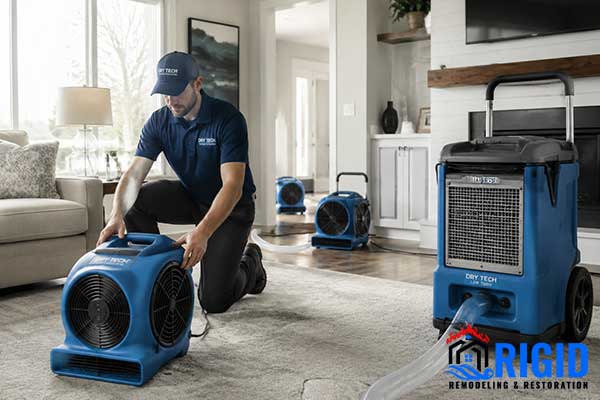
When water damage strikes, every second counts. At Rigid Restorations, we provide 24/7 emergency response to protect your property and peace of mind. From initial water extraction to complete structural drying, we handle it all with precision.
Fast, Professional Water Damage Restoration
Water damage restoration includes water removal, structural drying, damage repair, and restoring your property after leaks, floods, or other unexpected water-related issues. Because moisture can spread quickly and cause further damage, a fast response is essential to protect your home or business.
We work on a wide range of residential and commercial properties, delivering efficient restoration services that help return your space to its pre-loss condition.
Insurance Claim Assistance
We guide and assist you throughout the insurance claims process, including filing your claim with your homeowner’s insurance company, preparing a detailed scope of work using Xactimate software, and negotiating directly with your insurance adjuster to ensure all necessary repairs are properly documented and approved.
A Clear Process from Inspection to Repairs
A successful water damage restoration project requires more than simply removing visible water. It involves a step-by-step process that includes identifying the source of the problem, removing standing water, drying the affected materials, completing repairs, and ensuring the property is returned to a safe and functional condition. Our team follows a clear restoration process designed to keep the project organized, efficient, and properly documented.
How We Help
1. Inspection
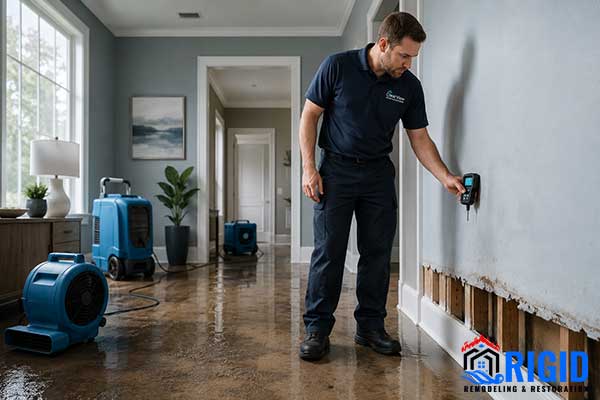
We assess the damage, identify the source, and determine the scope of work.
2. Water Extraction
We remove standing water quickly to help prevent further damage.
3. Demolition
We remove damaged materials before deep drying to prepare the structure for restoration.
4. drying
We use professional equipment to dry the area and reduce hidden moisture.
5. Repairs
We complete the repairs needed to restore your property safely and efficiently.
6. Insurance Support
We help document the damage and assist with the insurance claims process.
Why Fast Water Damage Restoration Matters
Water damage should never be ignored, even when it appears minor at first. Moisture can quickly move into surrounding materials, causing hidden damage that may worsen over time. Fast water damage restoration helps reduce the risk of structural issues, damaged finishes, and mold growth while improving the chances of restoring more of the affected materials.
What Property Owners Should Know About Water Damage Restoration
Many property owners have questions about how quickly water damage should be addressed, how long drying may take, and whether insurance may help cover the restoration work. Understanding the basics of the process can help you make informed decisions and act quickly when damage occurs. Below are answers to some of the most common questions we receive about water damage restoration.
Common Areas Affected by Water Damage
Water Damage Restoration FAQs
Water damage should be addressed immediately to help prevent further structural damage, material deterioration, and mold growth, which can begin within 24 to 48 hours
Homeowners insurance often covers water damage caused by sudden and accidental events, but coverage depends on your specific policy and the source of the damage.
Drying time varies based on the extent of the damage and the materials affected, but most projects take several days to fully dry.
Yes. We assist with filing your claim, preparing a detailed scope of work using Xactimate software, and working directly with your insurance adjuster.
A water emergency can begin with something that seems surprisingly small. A failed washing machine hose, a leaking water heater, a burst pipe, or an overflowing toilet can release enough water to affect flooring, drywall, cabinets, ceilings, insulation, and even structural components. By the time the visible water is gone, the property may still require extensive repair.
The difficult part is that water damage does not always reveal its full impact immediately. Flooring can warp underneath furniture, drywall can deteriorate from the inside, and moisture can remain trapped behind walls. This is why restoring a property after water damage involves much more than cleaning up a puddle.
Professional restoration is the process of taking a damaged property from the initial assessment through repair, reconstruction, cleaning, and final recovery. The goal is to return the affected space to a safe, functional, and comfortable condition while addressing both visible damage and problems that may be hidden beneath the surface.
What Is Water Damage Restoration?
Water damage restoration is the professional process of repairing and recovering a property after unwanted water has damaged its structure, finishes, fixtures, or contents. Restoration begins after the immediate water emergency has been controlled and focuses on repairing the consequences of the loss.
Depending on the severity of the incident, restoration may involve drywall repair, flooring replacement, cabinet repair, ceiling reconstruction, painting, trim replacement, odor control, cleaning, mold-related work, and other construction services. The exact scope depends on how long the materials were exposed to water, the type of water involved, and whether the affected components can be salvaged.
The purpose of professional restoration is not simply to make a damaged room look better. A successful project addresses the underlying damage and brings the property back toward its pre-loss condition.
Water Mitigation vs. Water Damage Restoration: What Is the Difference?
One of the most common sources of confusion for property owners is the difference between mitigation and restoration. The two services are closely connected, but they serve different purposes during the recovery process.
Water mitigation is primarily concerned with stopping additional damage. It can include emergency response, water extraction, containment, moisture detection, structural drying, and monitoring. The objective is to stabilize the property and prevent the situation from becoming worse.
Restoration begins once the property has been stabilized. It addresses the physical damage left behind by the water event. That may mean replacing damaged drywall, repairing flooring, reconstructing ceilings, restoring cabinets, repainting surfaces, or rebuilding sections of the property.
Understanding this distinction can help homeowners make better decisions. Drying the structure is not the same as rebuilding it, and replacing damaged materials before the property is adequately dried can create additional problems.
Why Professional Restoration Is More Than Cleanup
Cleaning up visible water is only one part of recovering from a water loss. Once water has affected building materials, the property may require skilled repair and reconstruction to return to normal.
For example, hardwood flooring may need to be evaluated for warping, drywall may need to be removed and replaced, and cabinets may require partial reconstruction. If water affected a ceiling, the repair may involve removing damaged material, addressing the underlying area, installing new drywall, finishing the surface, and repainting it.
Professional restoration therefore combines damage assessment with construction knowledge. The technicians need to understand not only how water behaves but also how damaged materials can be safely removed and replaced.
What Happens During a Water Damage Restoration Project?
Every property has its own circumstances, but professional restoration generally follows a logical sequence. The process begins with an assessment of the damage and a review of what happened.
The property is then stabilized and dried if that has not already been completed. Damaged materials are evaluated to determine what can be cleaned or repaired and what requires replacement. Once the affected areas are prepared, reconstruction can begin.
The final stages focus on finishing the property so that repaired rooms look and function as they did before the water event. This may include painting, flooring installation, trim work, cabinet repair, cleaning, and final inspection.
Step 1: Assess the Full Extent of the Damage
A restoration project should begin with a detailed assessment rather than immediately tearing out materials. The purpose is to understand what happened, where water traveled, which materials are affected, and which parts of the property may still be salvageable.
Visible damage can provide important clues, but it does not always reveal the entire situation. Moisture may have traveled underneath floors, behind cabinets, through walls, or into ceilings.
A careful assessment allows the restoration team to develop a repair plan based on the actual condition of the property rather than assumptions.
Step 2: Confirm That the Property Has Been Properly Dried
Before reconstruction begins, affected areas need to be appropriately dried and stabilized. Building materials should not be covered, painted, or rebuilt while significant moisture remains trapped inside them.
This step is particularly important because restoration can sometimes hide unresolved moisture. For example, installing new flooring over a damp subfloor may conceal the problem rather than solve it.
Moisture measurements can help confirm whether the structure is ready for the next stage. Once the property is appropriately dry, the restoration team can proceed with greater confidence.
Step 3: Remove Materials That Cannot Be Saved
Not every damaged material needs to be replaced. Some components may be cleaned, dried, refinished, or repaired. Others may have deteriorated too severely or may have been exposed to contaminated water.
The decision should consider the material itself, the type of water, duration of exposure, degree of damage, and safety concerns.
Selective removal is often preferable to unnecessary demolition. The goal is to remove what cannot reasonably be restored while preserving materials that remain structurally and aesthetically suitable.
Step 4: Prepare the Area for Reconstruction
After damaged materials have been removed, the affected space needs to be prepared for rebuilding. This may involve cleaning exposed surfaces, removing debris, addressing underlying damage, and ensuring that remaining materials are stable.
Preparation is important because new construction should be installed over a suitable foundation. If damaged sections are left behind or unresolved conditions remain, the finished repair may not perform as expected.
This stage is where mitigation and restoration often connect. Proper emergency drying creates the conditions that allow reconstruction to proceed correctly.
Step 5: Repair Walls and Drywall
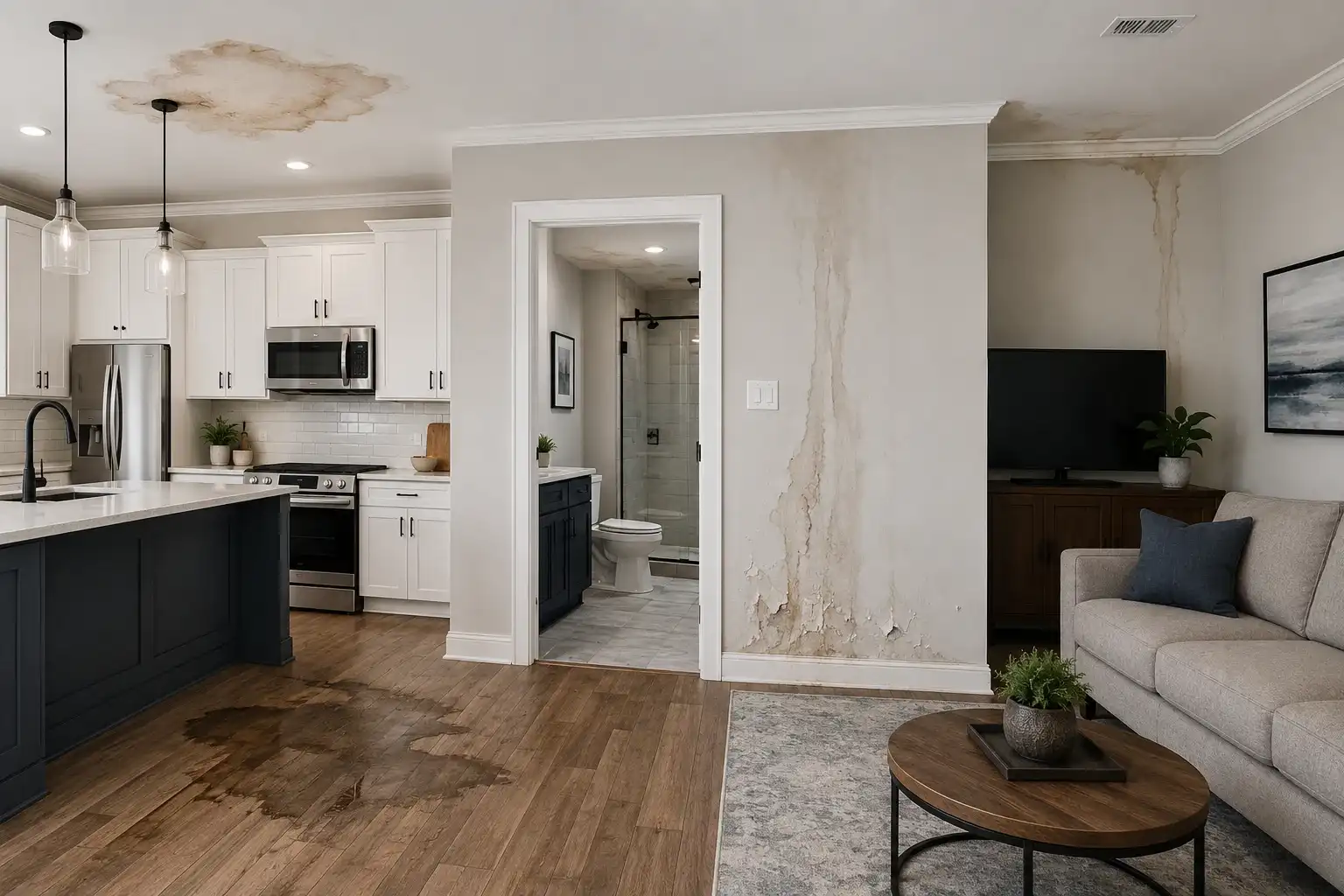
Drywall is one of the materials most frequently affected by indoor water leaks. Depending on how much water entered the wall and how long the material remained wet, sections may become stained, swollen, soft, or structurally compromised.
Restoration may involve removing damaged drywall, preparing the wall cavity, installing new material, taping and finishing joints, and matching the surrounding surface.
The goal is to make the repair blend into the existing room rather than leaving an obvious patch. Proper finishing and painting can make a repaired wall look like it was never damaged.
Step 6: Restore Damaged Ceilings
Ceiling damage can occur when water comes from plumbing above, roof leaks, HVAC systems, or an upper-level bathroom or appliance.
Water-stained ceilings should not automatically be painted over. The underlying cause needs to be addressed and the condition of the ceiling material evaluated.
If drywall or other ceiling materials have been compromised, restoration may require removal and replacement of affected sections. Once the structure is stable, the surface can be finished and painted to match the surrounding ceiling.
Step 7: Repair or Replace Damaged Flooring
Flooring can be one of the most complicated parts of restoration because water interacts differently with hardwood, laminate, carpet, tile, vinyl, and other materials.
Hardwood may swell, cup, buckle, or develop discoloration. Laminate can swell at seams. Carpet may retain moisture and odors. Tile itself may resist water, but the materials beneath it can still be affected.
The correct solution depends on the type of flooring and the condition of the underlying subfloor. In some situations, professional drying and refinishing may save portions of the floor. In others, replacement is necessary.
Step 8: Address the Subfloor
The subfloor is easy to overlook because it is hidden beneath the finished flooring. However, it can be one of the most important structural components affected by water.
If water penetrates beneath finished flooring, the subfloor may absorb moisture. Depending on the material and exposure, this can lead to swelling, deterioration, odors, or loss of structural integrity.
Before installing replacement flooring, the subfloor should be inspected and appropriately dried. If portions have been severely damaged, they may require repair or replacement.
Step 9: Restore Cabinets and Built-In Features
Kitchen and bathroom cabinets can be difficult to restore because water can enter from beneath sinks, dishwashers, refrigerators, plumbing connections, and flooring.
Some cabinets may be cleaned and dried successfully, while others may experience swelling, delamination, staining, or deterioration.
Professional restoration focuses on evaluating the actual condition rather than automatically replacing an entire cabinet system. Depending on the damage, individual components may be repaired or replaced while unaffected portions remain in place.
Step 10: Restore Trim, Baseboards, and Doors
Baseboards and trim are frequently affected because they sit close to the floor and can absorb water from wet flooring or wall materials.
Damaged trim may need to be removed and replaced. In some cases, materials can be cleaned, dried, and refinished.
Matching replacement trim to the existing profile and finish can make a significant difference in the final appearance. Restoration is not complete simply because the damaged wall has been repaired; the details matter as well.
How Mold Becomes a Concern After Water Damage
Mold is one of the biggest concerns property owners have after a water emergency. The key issue is moisture. When building materials remain damp, the environment can become favorable for microbial growth.
This is why restoration should not focus exclusively on visible repairs. A wall may look normal after painting, but if moisture remains behind it, the underlying problem has not truly been resolved.
If mold is already visible or suspected, the situation may require additional assessment and specialized remediation. The appropriate response depends on the size and nature of the affected area and the materials involved.
What Are the Signs of Hidden Water Damage?
Hidden water damage can be difficult to identify because it may develop behind finished surfaces. Homeowners may notice subtle signs before seeing obvious structural damage.
Persistent musty odors, bubbling paint, warped flooring, swollen baseboards, discoloration, peeling surfaces, unexplained dampness, or repeated stains can all justify further investigation.
However, hidden moisture can also exist without obvious symptoms. After a significant leak, professional moisture assessment can help determine whether affected materials are actually dry.
Why Odor Can Remain After Water Damage
A property can continue to smell musty even after visible water has disappeared. Odors may come from materials that remained damp, contaminated water, carpet padding, insulation, or other affected components.
Simply spraying an air freshener over the odor does not address its source. If moisture remains, the smell may return.
Proper restoration focuses on identifying and addressing the underlying cause. Depending on the situation, this may involve drying, cleaning, material removal, deodorization, or specialized remediation.
Restoring Personal Belongings After Water Damage
The building itself is only one part of a water loss. Furniture, clothing, rugs, electronics, photographs, documents, artwork, and other personal belongings can also be affected.
Some contents may be salvageable through professional cleaning and drying. Others may be too heavily damaged or contaminated to restore.
The sooner affected belongings are assessed, the more options may be available. Items should be handled according to their material and exposure rather than treating everything the same way.
What Happens to Wet Carpet?
Carpet can sometimes be dried successfully after certain types of clean-water incidents, particularly when the response is rapid. However, carpet padding can retain significant moisture and may require separate evaluation.
If the carpet has been exposed to contaminated water, the restoration approach may be substantially different. Contamination, duration of exposure, and material condition all influence whether the carpet can be safely restored.
A professional evaluation can help determine whether cleaning and drying are appropriate or whether replacement is the better option.
Can Hardwood Floors Be Restored?
Hardwood flooring is particularly sensitive to water because wood absorbs moisture and can change shape as it gains and loses moisture.
Water exposure can cause cupping, crowning, buckling, staining, and finish damage. However, not every wet hardwood floor automatically needs complete replacement.
The restoration approach depends on how long the wood was exposed, how much moisture it absorbed, whether the subfloor is affected, and whether the flooring can stabilize through controlled drying.
What Happens to Laminate Flooring?
Laminate flooring can be vulnerable to water because moisture can enter through seams and edges. Swelling and separation may occur when the core material absorbs water.
Once laminate has significantly swollen or delaminated, drying may not restore its original appearance or structural characteristics. Damaged sections may need to be replaced.
A professional inspection can determine whether the affected flooring is salvageable or whether replacement provides a better long-term solution.
What Happens When Water Damages Tile Flooring?
Tile itself is generally resistant to water, but the layers beneath it may not be. Water can move through grout joints, edges, cracks, or surrounding materials and reach the underlayment or subfloor.
This means that a tiled surface can appear completely normal while moisture remains underneath.
Restoration should therefore consider the entire flooring assembly rather than focusing only on the visible tile.
Water Damage in Kitchens
Kitchens contain many potential water sources, including sinks, dishwashers, refrigerators, water supply lines, garbage disposals, and plumbing connections.
Because cabinets and appliances can conceal moisture, kitchen water damage often requires more investigation than the visible puddle suggests.
Restoration may involve cabinet repair, flooring replacement, drywall work, appliance-area drying, plumbing-related repairs, and repainting. The goal is to restore the kitchen without unnecessarily replacing unaffected components.
Water Damage in Bathrooms
Bathrooms combine plumbing, fixtures, flooring, walls, ceilings, and waterproofing systems, making them common locations for water-related problems.
Leaks around toilets, tubs, showers, sinks, and supply lines can affect floors and walls. Water can also travel into adjacent rooms or lower levels.
Restoration may require drywall repair, flooring work, vanity or cabinet repair, ceiling restoration, and reconstruction around affected plumbing areas.
Water Damage in Basements
Basements can experience water intrusion from plumbing failures, foundation-related problems, drainage issues, storms, sump pump failures, and other sources.
Because basements often contain porous materials and limited natural ventilation, water can create persistent moisture problems if not properly addressed.
Restoration may involve removing damaged materials, drying the structure, repairing walls and floors, cleaning contents, and addressing the source of water intrusion.
Water Damage in Bedrooms and Living Areas
Water damage in living spaces can affect carpeting, hardwood, drywall, furniture, electronics, artwork, and personal belongings.
Even when the original water source is located elsewhere, moisture can travel into bedrooms and living areas through flooring and wall cavities.
A complete restoration plan should therefore consider both the structural materials and the contents of the room.
Commercial Water Damage Restoration
Commercial properties face additional challenges because water damage can interrupt business operations. Offices, retail stores, restaurants, warehouses, medical facilities, and other businesses may lose access to important areas after a water emergency.
Restoration must balance physical repairs with the need to return the business to operation. Depending on the property, this may involve coordinating drying, reconstruction, contents handling, and repairs around business activities.
A well-organized commercial restoration plan can help minimize unnecessary downtime while ensuring that repairs are completed properly.
Residential Water Damage Restoration
Homes require a restoration strategy that accounts for both the building and the people living in it. Water damage can disrupt bedrooms, kitchens, bathrooms, living rooms, storage spaces, and personal belongings.
Homeowners also need clear communication about what is being repaired, what can be saved, what needs replacement, and how long the process may take.
Professional restoration provides a structured path from emergency damage to a functional living environment again.
How Insurance Works With Water Damage Restoration
Insurance is one of the biggest concerns after a major water loss. Homeowners often want to know whether repairs will be covered, how much they will have to pay, and how the claim process works.
Coverage depends on the individual policy and the cause of the loss. Sudden and accidental damage may be treated differently from gradual leaks, maintenance-related problems, or flooding.
The restoration company can document damage and provide information about the work performed, but the insurance carrier determines coverage according to the terms of the policy.
How to Prepare for an Insurance Claim
Good documentation can make the claims process easier. When it is safe, property owners should photograph and record affected areas before extensive cleanup or demolition takes place.
Keep invoices, estimates, receipts, photographs, videos, and relevant communication with contractors and the insurance company.
A detailed record helps establish the timeline of the event and the work required to return the property to its previous condition.
Can a Restoration Company Work With Your Insurance Company?
Many restoration companies assist homeowners by providing documentation, estimates, photographs, moisture records, and other information that may be relevant to a claim.
Rigid Restorations states that it provides support with insurance claim documentation as part of its restoration services.
However, homeowners should remember that the restoration company and insurance carrier have different roles. The restoration company performs and documents the work, while the insurance company determines coverage under the policy.
How Much Does Water Damage Restoration Cost?
There is no universal price for restoring water damage because the scope can vary dramatically from one property to another.
The cost can depend on the size of the affected area, type of water, extent of structural damage, flooring and drywall replacement, cabinet repairs, contents cleaning, demolition, reconstruction, labor, materials, and other factors.
A small localized repair may be relatively straightforward, while a major loss involving multiple rooms can require extensive reconstruction.
The best way to understand the expected cost is through a professional assessment and detailed scope of work.
What Makes Water Restoration More Expensive?
Certain circumstances can increase restoration costs. Extensive structural damage, contaminated water, hidden moisture, multiple affected rooms, specialty flooring, cabinetry, difficult access, and prolonged exposure can all increase the complexity of a project.
The longer water remains untreated, the more likely it is that additional materials will require repair or replacement.
This is one reason immediate professional assessment can be valuable. Early action may preserve materials that could otherwise become too damaged to save.
Why the Cheapest Restoration Estimate May Not Be the Best Choice
Price matters, but the lowest estimate does not always represent the lowest overall cost.
A restoration company that performs limited inspection or incomplete drying may leave unresolved problems that become expensive later. A professional scope should explain what was found, what needs to be removed, what can be restored, and how the finished property will be returned to normal.
The goal should be a durable restoration rather than the cheapest possible temporary repair.
How Long Does Water Damage Restoration Take?
The timeline depends on the size and severity of the loss and the amount of reconstruction required.
Drying may take several days depending on conditions, while reconstruction can take longer when flooring, cabinets, drywall, ceilings, or other components need replacement.
A straightforward room may return to normal relatively quickly, while a major property loss can require a much longer restoration schedule.
Rather than relying on a generic number of days, homeowners should ask for a project-specific explanation based on the actual damage.
Why Restoration Cannot Always Be Finished in One Day
Even when the visible water has been removed quickly, reconstruction requires multiple stages. Materials need to be assessed, affected areas need to be dried, damaged components need to be removed, and replacement materials need to be installed and finished.
Paint, flooring, drywall compound, adhesives, and other construction materials may also require appropriate curing or installation conditions.
A professional restoration process prioritizes doing the work correctly rather than rushing through stages that affect the quality of the final result.
How to Prevent Future Water Damage
Restoration repairs the consequences of a water event, but prevention can reduce the risk of another emergency.
Homeowners should periodically inspect visible plumbing connections, appliance hoses, water heaters, sinks, toilets, and other common sources of leaks.
Knowing the location of the main water shutoff can also make a significant difference during an emergency. If a pipe suddenly fails, being able to stop the water quickly can reduce the amount of water entering the building.
What Should You Look for in a Restoration Company?
When choosing a restoration provider, consider experience, emergency availability, communication, assessment procedures, drying capabilities, reconstruction services, documentation, and the company’s approach to customer support.
It is useful to know whether the company handles only cleanup or can also complete repairs and reconstruction.
A company capable of taking a property through multiple stages of recovery can simplify the process because the homeowner does not necessarily have to coordinate several unrelated contractors.
How Water Damage Restoration Protects Your Investment
A home or commercial property is one of the largest investments most people make. Water damage can threaten that investment when moisture affects structural components or allows problems to continue unnoticed.
Professional restoration helps protect the property’s long-term condition by addressing damage rather than simply covering it up.
Properly repaired flooring, walls, ceilings, cabinets, and other components can restore both functionality and appearance while helping the property return to its previous standard.
Why You Should Not Paint Over Water Stains
Painting over a water stain can make a ceiling or wall look better temporarily, but it does not solve the reason the stain appeared.
The water source must first be identified and controlled. The affected material then needs to be evaluated to determine whether it can be dried and restored or requires replacement.
Once the underlying issue is resolved and the surface is properly prepared, painting can become part of the final restoration process.
Why You Should Not Install New Flooring Over a Wet Subfloor
New flooring installed over a damp subfloor can trap moisture beneath the finished surface. This can lead to continued deterioration, odors, or other complications.
The subfloor should first be inspected and dried. If it has suffered significant damage, the affected section may need to be repaired or replaced before new flooring is installed.
Taking the extra time to address the underlying structure helps ensure that the final flooring installation is not simply covering an unresolved problem.
What Happens If Water Damage Is Ignored?
Ignoring water damage does not make it disappear. Moisture can continue affecting building materials even when the original leak has stopped.
Over time, damaged materials may deteriorate, odors may develop, flooring may warp, and microbial growth may become a concern.
The longer restoration is delayed, the more difficult it can become to determine what was originally affected and what developed later. Early assessment gives property owners more options.
Can Restoration Restore a Property to Its Original Condition?
In many cases, professional restoration can bring a damaged property very close to its pre-loss condition. The final result depends on the severity of the damage, the materials involved, availability of matching products, and extent of reconstruction required.
A good restoration plan focuses not only on structural repairs but also on appearance. Matching flooring, paint, trim, cabinets, and finishes can make the completed space feel consistent with the rest of the property.
The objective is to move beyond emergency cleanup and complete the recovery process.
The Importance of Communication During Restoration
Water damage is stressful, and uncertainty can make the experience even more difficult. Homeowners should know what is happening, why specific materials need to be removed, what stage the project is in, and what needs to happen next.
Clear communication also helps with insurance documentation and project planning.
A professional restoration company should be able to explain the process in understandable language rather than leaving the property owner to guess what is happening behind the equipment and construction barriers.
What Should You Expect From the Final Walkthrough?
The final walkthrough is an opportunity to review the completed work and confirm that the affected areas have been restored.
Depending on the scope, this may involve inspecting repaired walls, ceilings, floors, cabinets, trim, paint, and other components.
The final goal is a property that is not only visually improved but also appropriately repaired and ready for normal use.
Water Damage Restoration in San Diego
Water damage restoration in San Diego helps homeowners and businesses recover after unexpected water-related incidents. Our restoration specialists assess the extent of the damage, remove affected materials, repair damaged areas, and restore your property to its original condition while preventing future problems.
Water Damage Restoration in Carlsbad
Water damage restoration in Carlsbad provides professional solutions for properties affected by leaks, flooding, or severe moisture problems. Our team handles every stage of the restoration process, including damage assessment, water removal, drying, repairs, and restoring damaged areas to ensure a safe living environment.
Water Damage Restoration in Del Mar
Water damage restoration in Del Mar helps property owners quickly recover from water emergencies while minimizing costly repairs. Our experienced technicians use professional restoration methods to repair affected structures, remove damaged materials, and restore your home or business after water damage.
Water Damage Restoration in Escondido
Water damage restoration in Escondido offers reliable recovery solutions for residential and commercial properties facing water damage. Our specialists identify the affected areas, manage repairs, and restore damaged spaces while focusing on preventing additional issues such as mold and structural deterioration.
Water Damage Restoration in Oceanside
Water damage restoration in Oceanside helps property owners restore their homes and businesses after flooding, plumbing failures, or other water-related incidents. Our team provides comprehensive restoration services designed to repair damage, improve safety, and return your property to a healthy condition.
Water Damage Restoration in Orange County
Water damage restoration in Orange County provides complete restoration support for properties affected by different types of water emergencies. Our professionals handle everything from initial damage evaluation to repairs and final restoration, helping property owners recover with confidence.
Water Damage Restoration in Mission Viejo
Water damage restoration in Mission Viejo helps residents and businesses restore their properties after unexpected water damage. Our restoration experts provide detailed solutions, including damage cleanup, repairs, moisture control, and structural restoration to bring affected spaces back to normal.
Water Damage Restoration in Irvine
Water damage restoration in Irvine provides fast and effective restoration services for properties impacted by leaks, flooding, or water-related accidents. Our trained specialists work carefully to repair damaged areas, protect your property, and restore a safe and comfortable environment.
Water Damage Restoration in Temecula
Water damage restoration in Temecula helps homeowners and businesses recover from water damage with professional repair and restoration services. Our team evaluates the damage, restores affected areas, and uses proven techniques to ensure your property receives complete recovery.
Water Damage Restoration in Murrieta
Water damage restoration in Murrieta provides dependable solutions for properties affected by water emergencies. Our specialists manage the entire restoration process, from assessing damage and repairing affected areas to restoring your property’s appearance, safety, and functionality.
Get Help Before Water Damage Gets Worse
The longer water damage is left untreated, the greater the risk of additional structural damage, material deterioration, and mold growth. If you are dealing with a leak, flood, or other water-related issue, taking action quickly can help protect your property and reduce the scope of repairs. Contact our team today to schedule an inspection and get the restoration process started.
Why Choose Us
24/7 Response
Quality Repairs from Start to Finish
Experienced Restoration Team
Detailed Scope of Work