Water Mitigation in Del Mar
We provide professional and detail-oriented water mitigation in Del Mar, helping homeowners and property owners minimize water damage caused by plumbing leaks, burst pipes, flooding, and other unexpected water-related incidents. Whether you’re dealing with a small leak or significant water intrusion, our team delivers tailored mitigation solutions to reduce further damage and protect your property.
From the initial inspection in Del Mar, we assess the affected areas, identify the source and extent of the water intrusion, and determine the most effective mitigation approach. Our process focuses on removing standing water, drying affected materials, and addressing excess moisture to help prevent further structural damage and reduce the risk of mold growth. We develop a customized mitigation plan based on your property’s condition, the severity of the damage, and your specific restoration needs.
We also prioritize clear communication and efficient coordination throughout the mitigation process. Our team works carefully to manage every stage, from water extraction and moisture detection to structural drying and coordination with restoration professionals when repairs are needed. If you’re filing an insurance claim, we can also help document the damage and coordinate the mitigation work to support a smoother recovery. Our goal is to help Del Mar property owners limit damage, protect their properties, and move forward with confidence.
How We Help
1. Damage Assessment
We carefully inspect the property to understand the extent of the damage and identify all impacted areas.
2. Documentation & Photos
We collect detailed photos, reports, and evidence needed to support a strong insurance claim.
3. Claim Preparation
We organize all required information and prepare a complete, accurate insurance claim package.
4. Insurance Submission
We submit the claim properly to your insurance company to ensure it enters the review process without delays.
5. Settlement Support
We help you review the final offer and ensure you receive a fair and accurate compensation outcome.
Protect Your Property with Professional Water Mitigation in Del Mar
Water intrusion can cause significant damage to your home or business, affecting walls, flooring, structural materials, and personal belongings. Leaking pipes, plumbing failures, flooding, and unexpected water incidents can also lead to hidden moisture problems that worsen over time if not addressed promptly.
Our water mitigation in Del Mar services are designed to help property owners control water damage and prevent further deterioration.
With our professional water mitigation in Del Mar, we focus on more than just removing visible water. Our goal is to identify the extent of the damage, address moisture concerns, and help reduce the risk of secondary issues such as mold growth and structural deterioration.
Why Choose Us
24/7 Response
Quality Repairs from Start to Finish
Experienced Restoration Team
Detailed Scope of Work
Claim Your Free Consultation + Get a Deductible Discount
Start your remodeling or restoration project today with expert support and exclusive savings that reduce your out-of-pocket costs.
Water Mitigation in Del Mar: Complete Step-by-Step Guide
Water damage can quickly affect the safety, condition, and functionality of your home or business. From leaking pipes and overflowing appliances to roof leaks and flooding, unexpected water intrusion can damage flooring, drywall, insulation, and structural materials. Professional water mitigation in Del Mar helps property owners address these issues promptly, limit further damage, and reduce the risk of long-term moisture problems.
Unlike basic water cleanup, water mitigation involves a systematic process designed to control the source of water intrusion, remove standing water, identify affected materials, and dry the property as thoroughly as possible. Depending on the severity of the incident, the process may also involve removing damaged materials, cleaning affected surfaces, and coordinating repairs or additional restoration services.
In this guide, we explain the complete water mitigation process in Del Mar, from the initial inspection and emergency water extraction to structural drying, moisture monitoring, and final evaluation. Understanding these steps can help homeowners and business owners make informed decisions when dealing with unexpected water damage.
Initial Inspection and Water Damage Assessment
The first step in professional water mitigation in Del Mar is evaluating the affected property. A thorough inspection helps determine where the water originated, how far it has spread, and which building materials may be affected. This information allows mitigation professionals to develop an appropriate plan for controlling the damage and preventing additional problems.
Identifying the Source of Water Intrusion
Water intrusion can occur for several reasons, including plumbing leaks, burst pipes, malfunctioning appliances, damaged water heaters, roof leaks, and storm-related flooding. Identifying the source is essential because removing the visible water will not solve the problem if additional water continues to enter the property.
Depending on the situation, the water supply may need to be shut off, a plumbing problem may require repair, or temporary protection may be necessary to prevent further water intrusion. If the source involves an ongoing leak or damaged building component, addressing it should be a priority before the affected area can be properly dried.
The type of water involved also matters. Water from a clean supply line may present different cleanup requirements than water containing sewage, chemicals, or other contaminants. When contamination is suspected, appropriate protective equipment and specialized handling procedures may be necessary.
Evaluating Visible and Hidden Moisture
Water does not always remain on the surface where it first appears. It can seep beneath flooring, behind baseboards, into wall cavities, and through insulation or other porous materials. As a result, an area that looks relatively dry may still contain moisture that could contribute to material deterioration or mold growth.
Mitigation professionals may use moisture meters, thermal imaging equipment, and other inspection tools to help identify affected areas. These tools can provide additional information about moisture distribution, although findings may need to be verified through further inspection.
A detailed assessment helps establish the scope of the mitigation work and determines which areas require water extraction, specialized drying, material removal, or additional evaluation.
Emergency Water Extraction
Once the water source has been controlled and the affected areas have been assessed, the next step is removing standing water. Prompt extraction is an important part of water mitigation in Del Mar because prolonged exposure can increase damage to flooring, walls, furniture, and other materials.
Removing Standing Water From the Property
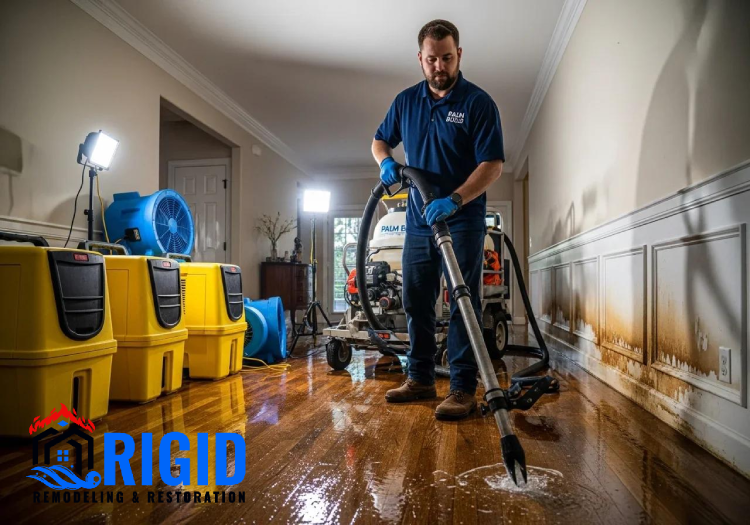
Depending on the amount of water present, mitigation teams may use water extraction vacuums, pumps, and other commercial equipment to remove accumulated water. The appropriate equipment depends on the depth of the water, the size of the affected area, the type of flooring, and the accessibility of the damaged spaces.
Removing standing water helps reduce the amount of moisture that building materials can absorb. It also prepares the affected areas for the next stage of the mitigation process: structural drying.
Water extraction should be performed carefully, particularly when water has reached electrical outlets, wiring, appliances, or other potentially hazardous components. Wet electrical systems can present a serious shock hazard and should be evaluated by qualified professionals before affected equipment or circuits are used again.
Protecting Furniture and Personal Belongings
Water damage can affect furniture, electronics, clothing, documents, and other personal belongings. When possible, items should be moved away from wet areas to prevent further exposure and allow mitigation work to proceed efficiently.
The condition of each item and the type of water involved help determine whether it can be cleaned and restored. Some nonporous belongings may be suitable for cleaning, while upholstered furniture, paper products, and other absorbent materials may require specialized treatment or replacement.
Separating affected belongings from unaffected items also helps keep the work area organized and reduces the risk of transferring contamination to clean spaces.
Structural Drying and Moisture Control
Removing standing water does not necessarily mean the property is dry. Moisture can remain trapped in drywall, wooden framing, subfloors, insulation, and other building materials. Professional structural drying focuses on reducing this residual moisture and helping prevent additional deterioration.
Using Commercial Air Movers and Dehumidifiers
Commercial air movers and dehumidifiers are commonly used during water mitigation. Air movers increase airflow across wet surfaces, encouraging moisture to evaporate, while dehumidifiers remove water vapor from the surrounding air.
The equipment is positioned according to the affected materials, the size of the damaged area, and the property’s drying requirements. In some situations, additional drying methods may be needed to address moisture inside wall cavities, beneath flooring, or within other enclosed spaces.
Drying times vary depending on the amount of water, the materials involved, indoor temperature, humidity, and the duration of exposure. For this reason, a professional drying plan should be based on the property’s actual condition rather than an assumed completion time.
Monitoring Moisture Levels During Drying
Moisture monitoring helps determine whether the affected materials are drying as expected. Mitigation professionals may take readings at multiple locations and compare them with measurements from unaffected areas or established drying targets.
This process is particularly important when water has reached structural wood, drywall, subfloors, or insulation. A surface may feel dry while moisture remains deeper inside the material.
Monitoring also helps identify areas where drying is progressing slowly. If certain materials cannot be dried adequately or have deteriorated beyond recovery, removal and replacement may be necessary before reconstruction begins.
Cleaning and Sanitizing Water-Affected Areas
After water extraction and during the drying process, affected surfaces and materials may require cleaning. The appropriate procedure depends on the source of the water, the extent of contamination, and the types of materials involved.
Cleaning Affected Surfaces and Materials
Surfaces exposed to relatively clean water may be suitable for cleaning with appropriate products and methods. However, water from sewage backups, contaminated flooding, or unknown sources may introduce harmful microorganisms and other contaminants.
When contamination is suspected, the affected area should be assessed carefully before cleanup proceeds. Specialized protective measures, controlled material removal, and professional cleaning may be necessary.
Porous materials that have absorbed contaminated water can be particularly difficult to restore. Depending on their condition, these materials may need to be removed and replaced rather than cleaned in place.
Removing Damaged Materials When Necessary
Not every water-damaged material needs to be discarded. Some materials can be dried and restored if they remain structurally sound and can be cleaned appropriately. Others may become swollen, warped, weakened, or contaminated beyond practical recovery.
For example, drywall with significant swelling or damaged seams may require removal. Wet insulation may also need replacement if it cannot be adequately dried or cleaned. Flooring materials should be evaluated alongside the subfloor to determine whether moisture has become trapped underneath.
Careful material assessment helps avoid unnecessary demolition while ensuring that damaged or unsuitable materials do not remain concealed inside the property.
Preventing Mold Growth After Water Damage
One of the most important objectives of water mitigation in Del Mar is controlling moisture before it leads to additional problems. Mold can develop on damp materials when suitable moisture and environmental conditions are present, making prompt drying and effective moisture management essential.
Why Timely Drying Matters
Mold may begin growing within approximately 24 to 48 hours under favorable conditions. However, the actual timeline depends on moisture levels, temperature, the material involved, and other environmental factors.
Delays in addressing water intrusion can allow moisture to spread into concealed spaces, increasing the difficulty of drying and potentially expanding the area requiring remediation.
Prompt water extraction, appropriate drying equipment, and regular moisture monitoring help reduce these risks. The objective is to identify and address moisture before it causes additional damage to building materials or creates conditions favorable to mold growth.
Identifying Signs of Potential Mold Problems
Some signs of moisture-related problems include persistent musty odors, visible discoloration, peeling paint, swollen baseboards, and recurring damp spots. These signs do not always confirm the presence of mold, but they may indicate that further inspection is needed.
If visible mold is discovered or musty odors persist after drying, the affected area should be evaluated to determine the source and extent of the problem. Water mitigation addresses moisture-related damage, while established mold growth may require a separate remediation process.
Effective prevention depends on resolving the original source of water intrusion and ensuring that affected materials are properly dried or replaced when necessary.
Addressing Different Types of Water Damage in Del Mar
Water mitigation requirements vary according to the source of the water, the amount of moisture involved, and the location of the affected areas. Understanding these differences helps property owners recognize why each incident requires an assessment tailored to its specific circumstances.
Plumbing Leaks and Burst Pipes
Plumbing failures are a common source of indoor water damage. A burst pipe can release a substantial amount of water in a short period, while a slow leak may remain unnoticed for weeks or months.
Water from plumbing problems can spread beneath flooring, enter cabinets, and travel through wall cavities. Even after the damaged pipe has been repaired, the surrounding materials may retain moisture that requires professional drying.
Water mitigation for plumbing-related incidents typically involves controlling the leak, extracting standing water, inspecting affected materials, and monitoring the drying process. The extent of the work depends on how long the leak continued and how far the water traveled.
Roof Leaks and Storm-Related Water Intrusion
Roof damage can allow rainwater to enter attics, ceilings, insulation, and interior walls. Water may also travel along structural components before becoming visible inside the property, making the original entry point difficult to identify.
Mitigation may involve documenting the affected areas, removing accumulated water, drying wet materials, and arranging temporary protection or repairs to prevent further intrusion.
When storm damage affects a property, it is important to distinguish between the immediate water mitigation work and any roof repairs or reconstruction that may be required afterward.
Appliance Leaks and Overflowing Fixtures
Dishwashers, washing machines, refrigerators with water connections, and water heaters can all cause water damage when connections fail or equipment malfunctions. Overflowing sinks, bathtubs, and toilets can also affect surrounding rooms and adjacent spaces.
The amount of damage depends on the volume of water released, the time it takes to discover the incident, and the materials exposed to moisture.
A mitigation team evaluates the affected area, removes standing water, and determines which materials require drying or replacement. If the water source may involve contamination, additional cleaning and protective measures may be required.
Water Mitigation for Residential Properties in Del Mar
Water damage in a home can disrupt everyday activities and affect multiple rooms. Kitchens, bathrooms, laundry areas, bedrooms, and living spaces may all be vulnerable to leaks, plumbing failures, and other forms of water intrusion.
Protecting Floors, Walls, and Interior Finishes
Residential water mitigation often involves evaluating flooring, drywall, baseboards, cabinetry, and other interior finishes. Water may travel beyond the room where the incident began, affecting adjoining spaces or the materials beneath finished surfaces.
The mitigation process focuses on identifying the full extent of the affected area, removing excess water, and drying materials that can be safely preserved. Damaged materials that cannot be adequately restored may need to be removed before repairs begin.
Careful moisture assessment is particularly important when water reaches concealed areas. Addressing hidden moisture early can help prevent additional deterioration and reduce the likelihood of more extensive repair work.
Minimizing Disruption to Household Activities
Water mitigation can require equipment to remain in place while the affected areas dry. Depending on the severity of the incident, certain rooms may be temporarily inaccessible or unsuitable for normal use.
A clearly organized mitigation plan helps homeowners understand which areas are affected, what equipment is needed, and which steps must be completed before repairs can begin.
Communication throughout the process also helps property owners prepare for temporary disruptions and make informed decisions about damaged belongings, material removal, and subsequent restoration work.
Water Mitigation for Commercial Properties in Del Mar
Water intrusion can also disrupt offices, retail stores, restaurants, and other commercial facilities. In addition to affecting walls and flooring, water damage may threaten inventory, electronic equipment, documents, and business operations.
Protecting Equipment, Inventory, and Workspaces
Commercial properties often contain valuable equipment and materials that require careful evaluation after water exposure. Where safe and practical, unaffected inventory and equipment may need to be moved away from the damaged area.
The mitigation team assesses the affected spaces and identifies priorities based on the extent of the damage, the type of materials involved, and the need to protect unaffected areas.
Some businesses may also need to address moisture in storage rooms, shared walls, or spaces containing sensitive equipment. Appropriate drying and cleaning procedures help manage the damage while reducing the risk of further disruption.
Coordinating Mitigation Around Business Operations
Depending on the location and severity of the incident, water mitigation may affect access to parts of a commercial property. Coordinating work schedules, restricting access to hazardous areas, and communicating with property managers can help keep the process organized.
The mitigation plan should account for the affected spaces, necessary safety precautions, and any operational requirements that influence the sequence of work.
Although every incident is different, a systematic approach can help commercial property owners address immediate water damage and prepare for the repairs needed to resume normal operations.
Working With Insurance During Water Mitigation
Water damage can result in unexpected expenses, so insurance documentation is often an important part of the recovery process. Coverage depends on the policy language, the source of the water, applicable exclusions, and the circumstances surrounding the incident.
Documenting the Water Damage
Photographs and videos can help record the condition of the property before substantial cleanup or repairs take place. Property owners may also want to keep records of damaged belongings, visible water intrusion, affected building materials, and emergency measures taken to protect the property.
Written estimates, inspection findings, moisture readings, and invoices may also be useful when preparing a claim.
Documentation should not delay urgent measures needed to protect people or prevent additional damage. If immediate action is necessary, property owners can document the situation as thoroughly as circumstances safely allow.
Coordinating With the Insurance Provider
Contacting the insurance company promptly can help clarify reporting requirements, documentation expectations, and any approval procedures that apply to the claim.
A water mitigation company may be able to provide photographs, moisture assessment findings, and a written description of the proposed work. However, the availability of these services and their acceptance by an insurer can vary.
Property owners should review their policy and confirm the insurer’s requirements before authorizing non-emergency work when prior approval is required. Insurance coverage is not guaranteed, and the insurer makes coverage decisions according to the applicable policy terms.
Final Moisture Assessment and Quality Control
Before the mitigation process is considered complete, the affected areas should be evaluated to determine whether the necessary water removal and drying work has been performed. This final assessment helps identify remaining moisture concerns and determine whether additional mitigation or repairs are needed.
Confirming That Affected Materials Have Dried
Moisture readings and visual inspections help evaluate the condition of affected building materials. Measurements may be compared with unaffected areas or appropriate drying targets to determine whether additional drying is necessary.
Particular attention should be given to locations where moisture can remain concealed, including wall cavities, subfloors, insulation, and areas beneath cabinets.
If readings indicate that materials remain excessively damp, the drying plan may need to be adjusted. Materials that cannot be adequately dried or have suffered significant damage may require removal and replacement.
Preparing the Property for Restoration and Repairs
Water mitigation and full property restoration are related but distinct stages. Mitigation focuses on controlling the immediate damage, removing excess water, and addressing moisture. Restoration may include rebuilding walls, replacing flooring, repainting surfaces, and repairing other damaged components.
Once mitigation is complete, the property owner can review the remaining repair requirements and arrange the necessary work. Depending on the scope of the damage, some repairs may be handled by the same provider or coordinated with other qualified contractors.
A clear understanding of what has been completed and what remains helps property owners plan the next stage of recovery.
Choosing a Water Mitigation Company in Del Mar
Selecting a suitable service provider is an important part of managing water damage. A qualified company should be able to assess the affected areas, explain its mitigation approach, and identify the work needed to address moisture effectively.
Experience With Different Water Damage Scenarios
Look for a provider with experience handling plumbing leaks, burst pipes, appliance failures, roof leaks, and flooding. Different incidents can affect building materials in different ways, so the ability to assess the specific source and extent of the damage is important.
Ask how the company identifies hidden moisture, monitors drying progress, and determines whether affected materials can be restored or need to be replaced.
Relevant training, certifications, licensing where required, and appropriate insurance are also factors worth reviewing when selecting a service provider.
Clear Estimates and Communication
A professional provider should explain the proposed scope of work, the equipment required, the expected stages of mitigation, and any potential complications identified during the inspection.
Written estimates and clear documentation help property owners understand the work being performed and evaluate any changes that may become necessary as additional damage is discovered.
It is also helpful to ask how progress will be communicated, whether moisture readings will be documented, and how the company coordinates with contractors if reconstruction is needed.
Understanding the Scope of Mitigation Services
Not every water mitigation project includes complete repairs or mold remediation. Some providers focus primarily on water extraction and structural drying, while others offer additional cleaning, demolition, and restoration services.
Before work begins, confirm which services are included in the agreement and which may require separate contractors or estimates.
Understanding these distinctions helps property owners plan more effectively and reduces confusion about the responsibilities involved in returning the property to its pre-damage condition.
Final Thoughts
Water damage can affect much more than the visible surfaces of a home or business. Moisture can spread beneath flooring, enter wall cavities, damage insulation, and create conditions that contribute to mold growth or structural deterioration if the affected areas are not addressed properly.
Professional water mitigation in Del Mar provides a systematic approach to controlling water intrusion, extracting standing water, drying affected materials, and evaluating the property for remaining moisture concerns. The specific steps depend on the source of the water, the extent of the damage, and whether contaminated materials or additional hazards are present.
Acting promptly, documenting the damage, and working with a qualified mitigation provider can help property owners reduce further deterioration and make informed decisions about necessary repairs.
By understanding the mitigation process and addressing both visible and hidden moisture, Del Mar homeowners and business owners can take practical steps toward protecting their properties and preparing for the restoration work that may follow.
Claim Your Free Consultation + Get a Deductible Discount
Start your remodeling or restoration project today with expert support and exclusive savings that reduce your out-of-pocket costs.
WATER mitigation IN DEL MAR FAQs
Water mitigation involves removing standing water, drying affected materials, and controlling moisture to help prevent further property damage. Prompt water mitigation in Del Mar can reduce the risk of structural deterioration, damaged belongings, and mold growth.
The duration of water mitigation depends on the amount of water, the affected materials, and the extent of the damage. Water extraction may be completed relatively quickly, while structural drying can take several days or longer. Moisture monitoring helps determine when the affected materials have dried sufficiently.
Homeowners insurance may cover water mitigation when the damage results from a covered event, such as certain sudden and accidental plumbing leaks. Coverage varies depending on the policy, the source of the water, and applicable exclusions. Property owners should contact their insurance provider to confirm coverage and understand any documentation or approval requirements.