Water Damage Restoration in Del Mar
We provide expert and detail-focused water damage restoration in Del Mar, helping homeowners and property owners recover from water damage caused by leaks, burst pipes, flooding, and other unexpected incidents. Whether you’re dealing with a minor water intrusion or extensive property damage, our team delivers tailored restoration solutions designed to minimize further damage and restore your property safely and efficiently.
From the initial assessment in Del Mar, we carefully evaluate the affected areas, identify visible signs of water damage, and determine the appropriate restoration steps. Our approach focuses on addressing moisture, drying affected materials, and identifying potential concerns such as hidden water intrusion and mold growth. We develop a restoration plan based on your property’s condition, the extent of the damage, and your specific needs.
We also prioritize clear communication and careful coordination throughout the restoration process. Our team works to manage each stage efficiently, from water removal and structural drying to necessary repairs and restoration. If you’re filing an insurance claim, we can also help document the damage and coordinate the restoration process to support a smoother recovery. Our goal is to help Del Mar property owners move forward with confidence and restore their spaces to a safe, functional condition.
How We Help
1. Damage Assessment
We carefully inspect the property to understand the extent of the damage and identify all impacted areas.
2. Documentation & Photos
We collect detailed photos, reports, and evidence needed to support a strong insurance claim.
3. Claim Preparation
We organize all required information and prepare a complete, accurate insurance claim package.
4. Insurance Submission
We submit the claim properly to your insurance company to ensure it enters the review process without delays.
5. Settlement Support
We help you review the final offer and ensure you receive a fair and accurate compensation outcome.
Restore Your Property with Expert Water Damage Restoration in Del Mar
Water damage can quickly disrupt your home or business, leading to damaged walls, flooring, and personal belongings. Leaks, burst pipes, flooding, and moisture buildup can also create hidden problems that worsen over time if not addressed promptly.
Our water damage restoration in Del Mar services are designed to help property owners recover from water-related damage with a thorough and professional approach. From assessing the affected areas and removing excess water to drying, cleanup, and restoring damaged materials, we focus on helping return your property to a safe, clean, and functional condition.
With our professional water damage restoration in Del Mar, we go beyond addressing visible damage. Our goal is to identify affected areas, minimize further deterioration, and provide reliable restoration solutions tailored to your property’s needs. From the initial assessment to the final stages of restoration, we work to make the recovery process as smooth and stress-free as possible.
Why Choose Us
24/7 Response
Quality Repairs from Start to Finish
Experienced Restoration Team
Detailed Scope of Work
Claim Your Free Consultation + Get a Deductible Discount
Start your remodeling or restoration project today with expert support and exclusive savings that reduce your out-of-pocket costs.
Water Damage Restoration in Del Mar: Complete Step-by-Step Guide
Water damage can cause serious problems for your home or business, from damaged flooring and drywall to hidden moisture, mold growth, and structural deterioration. Whether the damage is caused by a burst pipe, plumbing leak, roof leak, appliance malfunction, or flooding, professional water damage restoration in Del Mar can help restore your property and prevent further damage.
Unlike simple water cleanup, water damage restoration involves a comprehensive process that includes damage assessment, water extraction, moisture detection, structural drying, cleaning, and repairs. Every step plays an important role in protecting your property and ensuring the affected areas are properly restored.
In this guide, we explain the complete water damage restoration process in Del Mar, from the initial inspection to the final repairs, so you know what to expect when dealing with unexpected water damage.
Initial Inspection and Water Damage Assessment
The first step in any water damage restoration in Del Mar project is a thorough inspection of the affected property. Identifying the source, extent, and severity of the damage helps restoration professionals determine the appropriate cleanup and repair methods.
Identifying the Source of Water Damage
Water damage can originate from several sources, including leaking pipes, overflowing toilets, damaged water heaters, roof leaks, and storm-related flooding. Before restoration begins, the source of the water must be identified and addressed to prevent additional moisture from entering the property.
If the damage involves a plumbing failure, the affected water supply may need to be shut off. In cases involving storm damage or roof leaks, temporary protective measures may also be necessary.
Evaluating Visible and Hidden Damage
Water does not always remain in the areas where it first appears. It can seep behind walls, beneath flooring, into insulation, and around structural components. Restoration professionals use moisture meters and other appropriate inspection equipment to identify affected materials and determine the extent of the damage.
A detailed assessment helps establish the scope of the restoration project and identifies areas that may require water extraction, drying, material removal, or reconstruction.
Emergency Water Extraction
Once the initial assessment is complete and the water source has been controlled, the next step is removing standing water from the property. Prompt extraction is important because prolonged exposure to moisture can increase damage to building materials and personal belongings.
Removing Standing Water
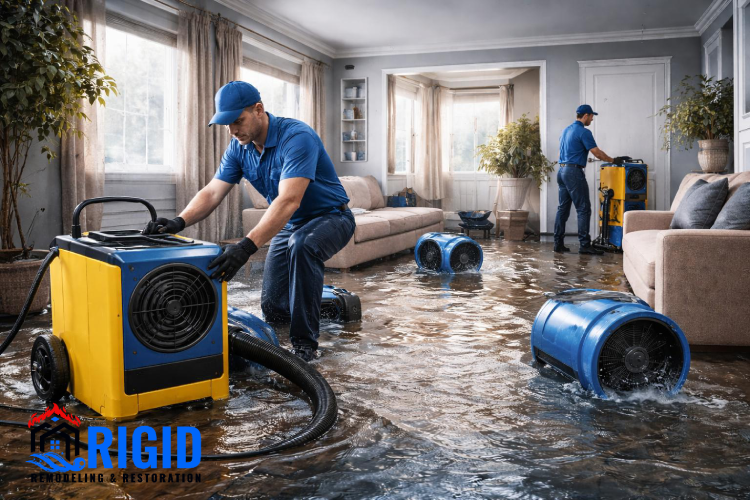
Professional restoration teams use suitable pumps, wet vacuums, and water extraction equipment to remove accumulated water from affected rooms. The equipment used depends on the amount of water, the type of flooring, and the accessibility of the damaged areas.
Quick water removal helps limit additional damage to carpets, hardwood floors, drywall, baseboards, and other materials. It also prepares the property for the next stage of the restoration process.
Protecting Furniture and Personal Belongings
Furniture, electronics, documents, and other belongings may need to be moved away from affected areas. Depending on their condition and the type of water involved, some items may be suitable for professional cleaning and drying, while others may require replacement.
Separating salvageable belongings from heavily damaged materials helps keep the restoration process organized and reduces the risk of additional damage during cleanup.
Structural Drying and Moisture Control
Removing visible water is only part of the restoration process. Moisture can remain trapped inside walls, floors, cabinets, and other building materials long after standing water has disappeared. Professional drying helps address this hidden moisture and reduce the risk of secondary damage.
Using Commercial Dehumidifiers and Air Movers
Industrial air movers and commercial dehumidifiers are commonly used to accelerate drying. Air movers improve airflow across wet surfaces, while dehumidifiers remove moisture from the surrounding air.
The equipment is positioned according to the affected areas and the property’s drying requirements. Drying times vary depending on the amount of water, the materials involved, indoor conditions, and how long the property remained wet.
Monitoring Moisture Levels
During the drying process, restoration professionals monitor moisture levels in affected materials and compare readings over time. This helps determine whether additional drying is necessary before repairs begin.
Proper moisture monitoring is particularly important when water has penetrated drywall, subfloors, insulation, or structural wood. Closing up damp areas too early can contribute to persistent moisture problems and potential mold growth.
Cleaning, Sanitization, and Mold Prevention
After water extraction and structural drying, the affected areas may require cleaning and treatment. The appropriate methods depend on the source of the water, the materials involved, and whether contamination is suspected.
Cleaning and Sanitizing Affected Surfaces
Surfaces exposed to clean water may require cleaning, while areas affected by contaminated water need more specialized handling. Water originating from sewage backups or other contaminated sources can contain harmful microorganisms and should be handled by appropriately trained professionals using suitable protective measures.
Cleaning and sanitization procedures are selected according to the type of contamination and the condition of the affected materials. Porous materials that cannot be adequately cleaned may need to be removed and replaced.
Preventing Mold Growth
Mold can begin growing on damp materials within approximately 24 to 48 hours under favorable conditions. This makes timely drying and moisture control important after water damage.
Restoration professionals assess areas where moisture may remain trapped and address conditions that support mold growth. If visible mold or a persistent musty odor is present, further evaluation may be needed to determine the appropriate remediation approach.
Preventing mold is not simply a matter of applying a surface treatment. Effective moisture control, appropriate material handling, and correction of the original water problem are essential to reducing the risk of recurrence.
Repairing Damaged Drywall, Flooring, and Building Materials
Once the affected areas have been cleaned and adequately dried, the restoration process can move into the repair and reconstruction stage. The extent of these repairs depends on how deeply the water penetrated the property and which materials were damaged.
Drywall and Insulation Repair
Water-damaged drywall may become soft, swollen, stained, or structurally compromised. Insulation behind walls may also retain moisture and require removal if it cannot be properly dried or cleaned.
Damaged materials are evaluated to determine whether they can be restored or must be replaced. Once the affected areas have been appropriately dried and prepared, new drywall and insulation can be installed as needed.
Flooring Restoration and Replacement
Flooring materials respond differently to water exposure. Carpet may retain moisture, laminate can swell, and hardwood may warp or develop stains. Tile flooring can also be affected if water reaches the underlying subfloor or surrounding materials.
Depending on the extent of the damage, flooring may be dried, cleaned, repaired, or replaced. Before installing new flooring, the underlying surface should be inspected to ensure that remaining moisture does not compromise the finished result.
Restoring Cabinets, Trim, and Interior Finishes
Cabinets, baseboards, doors, and decorative finishes may also be affected by water intrusion. Some items can be cleaned and restored, while others may require replacement due to swelling, separation, or deterioration.
The goal is to return the affected areas to a safe and functional condition while maintaining consistency with the property’s existing design whenever possible.
Addressing Water Damage in Del Mar Homes and Businesses
Water damage restoration in Del Mar requires an approach tailored to the property’s construction, the source of the water, and the conditions affecting the damaged areas. Both residential and commercial properties can experience water intrusion, and each may have different restoration priorities.
Residential Water Damage Restoration
In homes, water damage commonly affects bathrooms, kitchens, laundry rooms, bedrooms, and living areas. Leaking plumbing fixtures, failed appliances, roof leaks, and overflowing drains can damage flooring, cabinetry, drywall, and personal belongings.
A residential restoration project focuses on controlling the water source, protecting unaffected areas, drying the structure, and repairing damaged materials. Clear communication throughout the process also helps homeowners understand which areas can be restored and which may require replacement.
Commercial Water Damage Restoration
Businesses may experience water damage in offices, retail spaces, restaurants, storage rooms, and other commercial environments. In addition to building repairs, water intrusion can affect inventory, equipment, records, and daily operations.
Commercial restoration may require coordination around business hours, access restrictions, and the need to protect unaffected workspaces. Prompt assessment and a clearly organized restoration plan can help reduce disruption while addressing the underlying damage.
Working With Insurance After Water Damage
Water damage can create unexpected repair expenses, making insurance documentation an important part of the recovery process. Coverage depends on the policy, the cause of the damage, applicable exclusions, and the specific circumstances of the loss.
Documenting the Damage
Photographs and videos of affected rooms, damaged materials, and personal belongings can help establish the condition of the property after the incident. Keeping records of the date, suspected source, emergency services, and related expenses may also be useful when preparing an insurance claim.
Whenever possible, document the damage before disposing of affected belongings or beginning major repairs. However, documentation should never delay urgent steps needed to protect people or prevent additional property damage.
Coordinating Restoration and Insurance Claims
Homeowners should contact their insurance provider promptly to understand the policy’s requirements and reporting procedures. A restoration company may be able to provide inspection findings, moisture readings, photographs, and an itemized scope of work to support the documentation process.
Insurance coverage is not guaranteed, and the insurer makes coverage decisions according to the policy terms. Property owners should confirm approval requirements before authorizing non-emergency repairs and keep records of all communications and estimates.
Final Inspection and Quality Control
The final stage of water damage restoration involves checking the completed work and confirming that the affected areas are ready for normal use. This step helps identify any remaining concerns before the project is considered complete.
Verifying Drying and Repair Completion
Moisture readings should be reviewed to confirm that affected materials have reached appropriate drying targets. Repaired walls, flooring, cabinetry, and other building components should also be inspected for visible defects and incomplete work.
If moisture remains or new signs of water intrusion appear, further investigation may be necessary before the restoration can be considered complete.
Final Walkthrough and Restoration Review
A final walkthrough allows the property owner to review the completed repairs and discuss any outstanding concerns with the restoration team. This is also an opportunity to confirm that the original source of water damage has been addressed or that the necessary corrective work has been arranged.
A thorough review helps ensure that the property is returned to a clean, functional condition and that the restoration work aligns with the agreed scope.
Choosing a Water Damage Restoration Company in Del Mar
Selecting an experienced restoration provider can make the recovery process easier to manage. Water damage may involve several interconnected problems, so it is important to choose a company that can assess the damage, explain the restoration process, and coordinate the necessary cleanup and repairs.
Experience With Different Types of Water Damage
Look for a provider with experience handling common water damage scenarios, including plumbing leaks, appliance failures, flooding, and storm-related intrusion. The company should be able to explain how it identifies hidden moisture, determines which materials can be saved, and monitors the drying process.
Clear Estimates and Communication
A professional restoration company should explain the proposed work, expected stages, potential complications, and associated costs. Written estimates and clear communication help property owners understand the scope of the project and make informed decisions.
It is also helpful to ask about emergency response availability, relevant licensing or certifications, and how the company documents moisture readings and completed repairs.
Final Thoughts
Water damage can affect far more than the visible surfaces of a property. Hidden moisture, damaged building materials, and potential mold growth can create additional problems if the source is not addressed and the affected areas are not dried properly.
With a systematic approach to water damage restoration in Del Mar, property owners can move from emergency water removal to structural drying, cleaning, repairs, and final inspection with a clearer understanding of each stage.
Acting promptly, documenting the damage, and working with qualified restoration professionals can help limit further deterioration and support a more effective recovery for your home or business.
Claim Your Free Consultation + Get a Deductible Discount
Start your remodeling or restoration project today with expert support and exclusive savings that reduce your out-of-pocket costs.
WATER DAMAGE RESTORATIONS IN DEL MAR FAQs
Water damage restoration typically includes damage assessment, water extraction, structural drying, moisture control, cleaning and sanitization, mold prevention, and repairing or replacing damaged materials such as drywall, flooring, and cabinets.
You should contact a professional water damage restoration company as soon as possible after discovering water damage. Prompt water removal and drying can help minimize structural damage and reduce the risk of mold growth.
Insurance coverage depends on the cause of the damage and the terms of your policy. Sudden and accidental water damage may be covered, while gradual leaks or maintenance-related damage may be excluded. Document the damage and contact your insurance provider to understand your coverage.