

A kitchen remodel can completely transform the look, comfort, and functionality of your home. However, what starts as an exciting renovation project can quickly become an expensive experience when important decisions are overlooked.
From choosing materials without considering their long-term costs to making last-minute design changes, small mistakes can have a major impact on your renovation budget.
Many homeowners focus on cabinets, countertops, and appliances while underestimating the hidden expenses behind the project. Understanding the most common kitchen remodeling mistakes that blow budgets can help you avoid unnecessary costs, make smarter decisions, and keep your renovation on track.
1. Starting a Kitchen Remodel Without a Realistic Budget
One of the biggest mistakes homeowners make is starting a renovation based on an estimated amount rather than a detailed financial plan. A general budget may cover visible improvements, but it often overlooks labor, plumbing, electrical work, permits, delivery fees, and unexpected repairs.
A realistic kitchen renovation budget should account for every major part of the project, including materials, installation, and finishing work. It should also include a contingency fund of around 10% to 20% to cover unexpected expenses. Without this financial cushion, even a relatively small problem can disrupt the entire renovation.
2. Ignoring the Cost of Changing the Kitchen Layout
Changing the kitchen layout may seem like a great way to create a more attractive and functional space. However, moving major elements such as sinks, stoves, dishwashers, and refrigerators can significantly increase renovation costs.
Moving Plumbing Lines
Relocating a sink or dishwasher may require moving water supply pipes and drainage lines. If the new layout is far from the existing plumbing connections, the work can become more complicated and expensive.
Changing Electrical Connections
Moving appliances can also require new electrical outlets, dedicated circuits, and additional wiring. These changes should be planned before construction begins to avoid unexpected labor costs.
Modifying Walls
Removing or modifying walls can involve structural assessments, additional support beams, and building permits. Before deciding to create an open-concept kitchen, determine whether the wall is load-bearing and calculate the full cost of the modification.
Keeping plumbing and electrical systems close to their original positions is often one of the easiest ways to control kitchen remodeling expenses.
Read more: Bathroom Remodel Mistakes to Avoid
3. Choosing Cheap Materials That Need Frequent Replacement
Trying to save money by purchasing the cheapest available materials can lead to higher costs in the future. Kitchen surfaces experience daily wear from moisture, heat, food spills, cleaning products, and frequent use.
Low-quality cabinet hardware, countertops, flooring, and faucets may look acceptable initially but can deteriorate much faster than expected. Replacing these components a few years later can cost more than choosing durable materials from the beginning.
The better approach is to compare materials based on their durability, maintenance requirements, warranties, and total lifetime cost. For example, a reasonably priced quartz countertop may offer better long-term value than a cheaper surface that scratches or stains easily.
4. Ordering Custom Cabinets Without Checking Measurements
Cabinets are among the most expensive elements of a kitchen renovation, which makes measurement mistakes particularly costly. Ordering custom cabinets before confirming the exact dimensions of the room can result in gaps, poor alignment, and installation problems.
Even small measurement errors can affect cabinet doors, drawer openings, appliance spaces, and countertop dimensions. In some situations, incorrectly manufactured cabinets cannot be returned or modified without additional expense.
Before placing an order, make sure a professional verifies the measurements, including ceiling height, wall angles, window positions, plumbing connections, and appliance dimensions. It is also important to confirm the cabinet layout against the final kitchen design rather than relying on an early sketch.
5. Forgetting About Lighting and Electrical Planning
Lighting is often treated as a finishing detail instead of an essential part of kitchen design. Homeowners may spend most of their budget on cabinets and countertops, only to realize later that the kitchen has dark work areas or insufficient electrical outlets.
A well-designed kitchen needs different types of lighting to support cooking, cleaning, and everyday activities. General ceiling lighting provides overall brightness, while task lighting illuminates specific work areas such as countertops and sinks. Pendant lights and decorative fixtures can add visual interest without replacing practical lighting.
Electrical planning should also consider the number and location of outlets, appliance requirements, and future needs. Installing additional wiring after cabinets and walls have been finished can be much more expensive than including these details in the original renovation plan.
6. Making Last-Minute Design Changes
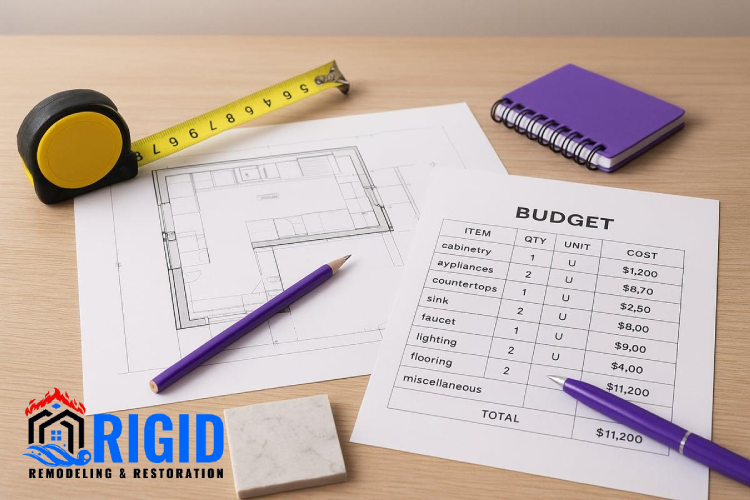
Changing your mind during construction is one of the most common kitchen remodel mistakes that blow budgets. You might decide to move a cabinet, replace the selected countertop, change the backsplash, or add an appliance after installation has already started.
Although individual changes may appear inexpensive, they often create additional labor, material waste, delivery costs, and project delays. Some modifications also require contractors to undo work that has already been completed.
To avoid this problem, finalize the kitchen layout, material selections, appliance specifications, and finish details before construction begins. If a change becomes necessary, ask your contractor for a written estimate showing its impact on the overall budget and schedule.
Read more: How Soon Should You Call a Water Mitigation Company?
7. Underestimating Labor and Installation Costs
Many homeowners calculate their renovation expenses by looking at the prices of materials and appliances. However, labor can represent a significant portion of the total kitchen remodeling cost, particularly when the project involves multiple trades.
Cabinet installation, countertop fitting, plumbing, electrical work, flooring, painting, and backsplash installation all require specialized skills. Choosing a contractor based only on the lowest quote can also create problems if the estimate excludes important services or uses inexperienced workers.
Always request an itemized estimate that separates labor, materials, demolition, installation, and finishing costs. Comparing detailed proposals makes it easier to understand what each contractor offers and identify expenses that may appear later.
8. Buying Appliances Before Finalizing the Kitchen Design
Purchasing appliances early may seem like a smart way to take advantage of discounts. However, choosing refrigerators, ovens, dishwashers, or cooktops before finalizing cabinet dimensions can create expensive compatibility issues.
Appliances come in different sizes and installation requirements. A refrigerator that is too wide may not fit between cabinets, while an oven may require electrical connections or ventilation that were not included in the original plan.
Before purchasing anything, confirm the appliance dimensions, clearance requirements, ventilation needs, and utility connections. Make sure the kitchen designer and contractor have the exact product specifications so that cabinets and countertops can be built around the selected appliances.
9. Overlooking Hidden Damage Behind Walls and Cabinets
Not every kitchen renovation expense is visible during the planning stage. Once old cabinets, flooring, or drywall are removed, contractors may discover problems such as water damage, mold, outdated wiring, or deteriorating plumbing.
These hidden issues can increase the renovation budget and extend the project timeline. Ignoring them is not a practical way to save money because they may eventually cause more serious damage.
Before construction begins, inspect areas around sinks, dishwashers, refrigerators, and other moisture-prone locations. Although it may not be possible to identify every hidden problem in advance, an initial inspection and a contingency fund can reduce the financial impact of unexpected repairs.
10. Spending Too Much on Trendy Design Features
Modern kitchen trends can make a renovation look impressive, but not every fashionable feature is worth the investment. Oversized kitchen islands, elaborate backsplashes, premium cabinet finishes, and decorative lighting can quickly consume a large portion of the available budget.
The problem is not necessarily choosing trendy designs. It is spending heavily on features that may lose their appeal or provide little practical value over time.
Instead, prioritize timeless materials and functional design choices for expensive, permanent elements. You can introduce current trends through relatively affordable details such as cabinet handles, pendant lights, bar stools, and decorative accessories. These items are easier to replace when your preferences change.
11. Choosing the Wrong Contractor or Skipping a Written Contract
Hiring an unreliable contractor can turn a manageable kitchen renovation into a costly project. Poor workmanship, unclear responsibilities, missed deadlines, and unexpected charges can affect both the final result and your finances.
A professional contractor should provide a clear scope of work, realistic timeline, payment schedule, and detailed cost estimate. Before hiring anyone, check previous projects, customer reviews, references, insurance coverage, and relevant licenses or qualifications required in your area.
A written contract is equally important. It should explain which materials are included, how additional work will be priced, who is responsible for permits, and how changes will be approved. Avoid relying on verbal agreements, especially when significant amounts of money are involved.
12. Forgetting About Permits, Inspections, and Building Regulations
Permits and inspections may seem like unnecessary expenses, but overlooking them can lead to serious financial problems. Depending on the location and scope of the renovation, electrical modifications, plumbing changes, structural work, and ventilation upgrades may require official approval.
Starting work without the necessary permits can result in fines, construction delays, or requirements to remove and redo completed work. It may also create difficulties when selling the property or dealing with insurance claims.
Before construction begins, check local building regulations and confirm which permits are required. A qualified contractor should be familiar with the approval process and help ensure that all work meets applicable safety standards.
How to Keep Your Kitchen Remodel Within Budget
Avoiding common renovation mistakes is important, but having a clear strategy makes budget management much easier. A successful kitchen renovation requires balancing design preferences, practical needs, material quality, and available finances.
One effective approach is to separate essential improvements from optional upgrades. Fixing plumbing problems, improving electrical safety, and installing durable cabinets should generally take priority over decorative features.
It is also helpful to compare several contractor estimates and request detailed breakdowns rather than choosing the first available offer. Keep records of payments, material purchases, and approved design changes so you always know how much of the budget has been used.
Finally, avoid spending your entire budget before construction begins. Unexpected problems are common in renovation projects, and having money reserved for them can prevent unnecessary financial stress.
Kitchen Remodel Budget: Where Should You Spend and Save?
Not every part of a kitchen renovation deserves the same level of investment. Understanding which elements have the greatest impact on durability and functionality can help homeowners allocate their money more effectively.
| Kitchen Element | Where to Spend | Where to Save |
|---|---|---|
| Cabinets | Durable construction and quality hardware | Decorative finishes |
| Countertops | Durable, easy-to-maintain surfaces | Premium edge details |
| Appliances | Energy efficiency and reliable performance | Unnecessary smart features |
| Lighting | Proper task lighting and electrical installation | Decorative fixtures |
| Flooring | Water-resistant and durable materials | Expensive patterns |
| Backsplash | Easy-to-clean materials | Complex custom designs |
| Plumbing | Reliable pipes and professional installation | Decorative accessories |
The goal is not to choose the most expensive option in every category. Instead, invest in components that are difficult or costly to replace and save money on features that can be upgraded later.
Final Thoughts
A kitchen renovation is a major investment, and even small planning errors can have a noticeable effect on the final cost. From inaccurate measurements and poor contractor selection to unexpected structural repairs and last-minute design changes, many expenses can be avoided with better preparation.
Understanding these 12 kitchen remodel mistakes that blow budgets helps homeowners make informed decisions before construction begins. By setting a realistic budget, comparing contractors, choosing durable materials, and keeping a contingency fund, you can create a beautiful and functional kitchen without unnecessary financial pressure.
Frequently Asked Questions
- What is the most expensive mistake in a kitchen remodel?
Changing the kitchen layout after construction has started can be one of the most expensive mistakes. Moving plumbing, electrical connections, gas lines, or structural elements requires additional labor and materials. Finalizing the design before demolition helps prevent these unexpected expenses.
- How much extra money should I set aside for unexpected kitchen renovation costs?
It is generally recommended to reserve around 10% to 20% of your total renovation budget for unexpected expenses. This contingency fund can cover hidden water damage, outdated wiring, plumbing repairs, material price changes, and other problems discovered during construction.
- How can I save money on a kitchen remodel without sacrificing quality?
You can reduce costs by keeping the existing kitchen layout, choosing durable mid-range materials, comparing contractor estimates, and avoiding unnecessary custom features.