
Water moves fast. In Orange County, a burst supply line, roof leak, overflowing appliance, or wind-driven rain can turn a small drip into swollen baseboards, buckled floors, stained drywall, and musty air. What you do in the first day or two can affect repair costs, indoor air quality, insurance documentation, and how quickly your home feels normal again.
This guide explains what to do right now and how professional water damage repair in Orange County works. You’ll also see what homeowners should know about insurance claims in California and how to reduce the risk of repeat damage.
If you’re staring at wet drywall, soaked flooring, or a suspicious water stain, breathe. You can work the problem in steps, and you don’t have to do it alone. Rigid Remodeling and Restoration Inc. helps homeowners move from water damage to recovery through engineering-backed repair planning and insurance claim support in South Orange County and nearby service areas.
TL;DR
- Dry building materials within 24 to 48 hours to reduce the risk of mold and remove items that cannot be dried in time.
- Document the damage and mitigation from the start. In California, insurers generally must acknowledge claims within 15 days and accept or deny within 40 days after receiving proof of claim.
- Small, clean water spills may be manageable with DIY drying. A licensed professional should handle larger losses, contaminated water, hidden moisture, or multi-room damage.
- Safety comes first. Shut off the water, avoid standing water near electrical equipment, and wear gloves, goggles, and an N95 or better when cleaning moldy materials. If the water involves sewage, stormwater, or other contamination, call a professional.
- Document damage and mitigation from the start. In California, insurers generally must acknowledge notice of a claim within 15 calendar days. After receiving proof of claim, they generally must accept or deny the claim within 40 calendar days, unless they provide written notice explaining why more time is needed and continue providing required updates.
- A professional inspection can help identify hidden moisture behind walls, under cabinets, below flooring, and inside building materials before damage spreads.
Why Speed Matters and What Counts as Water Damage
Water damage means unwanted water has entered a building assembly, finish material, or personal property. Common sources include:
- A failed supply line
- An overflowing washer
- A roof leak
- Storm intrusion
- A slab leak
- A backed-up toilet
- A plumbing failure behind a wall
Wet, porous materials can trap moisture, including:
- Drywall
- Insulation
- Carpet pad
- Cabinetry
- Subflooring
Within about 24 to 48 hours, mold can begin to colonize damp materials, especially when ventilation is poor. That is why fast extraction, drying, and moisture control matter.
Professional water damage repair isn’t just about removing visible water. The real goals are to:
- Stop the source of the water
- Find the full moisture path
- Remove unsalvageable materials
- Dry the structure to the appropriate moisture levels
- Clean affected areas
- Rebuild safely
Our restoration specialists can take an engineering-backed approach to this process. That matters because water can move through:
- Walls
- Floors
- Framing
- Cabinets
- Structural cavities
These moisture paths aren’t always obvious from the surface. A stain on the wall or a soft baseboard may only be the visible part of a larger moisture problem.
Common Orange County Water Damage Triggers
Orange County homes face several recurring water damage risks:
- Wind-driven rain that gets under roofing, flashing, or around windows during winter storms
- Aging supply lines, angle stops, and appliance connections in tract homes and condos
- Roof, balcony, or deck drainage issues in multi-unit buildings
- Water heater leaks in garages, closets, or utility areas
- Toilet, shower, and tub overflows
- Runoff from slopes or hardscaped areas after heavy rain
- Coastal humidity can slow drying if ventilation is poor
- Hidden leaks behind cabinets, walls, and flooring
For sandbag locations and storm updates, OC Public Works posts local flood readiness resources and emergency contacts.
Your First 24 Hours: A Practical Action Plan
Unexpected pooling beneath baseboards can cause instant panic. Despite that, a clear timeline helps you regain control and protect your property’s value before permanent structural issues set in.
1. Stay Safe
If outlets, breakers, appliances, or wiring are wet, turn off power at the main panel only if you can do so safely. Avoid walking through standing water, especially if there may be electrical hazards.
2. Stop the Source
Close fixture shutoffs or the main water valve. If the issue is roof-related, cover openings only if it can be done without risk.
3. Document Everything
Take wide photos, close-up photos, and short videos before moving items. Continue documenting as cleanup progresses. Good documentation can be important for insurance claims.
4. Call Your Insurer
Call your insurer. Report the loss and ask how to submit proof of claim, mitigation receipts, photos, and repair estimates. In California, insurers generally must acknowledge notice of a claim within 15 calendar days. After receiving proof of claim, they generally must accept or deny coverage within 40 calendar days, unless they provide written notice explaining why more time is needed and continue providing required updates.
5. Schedule a Professional Inspection if Damage May Be Hidden
Water often travels farther than it appears. Moisture can collect under flooring, behind baseboards, inside wall cavities, below cabinets, and beneath carpet pad. Rigid Restorations offers free inspections to help homeowners understand the extent of the damage before small problems become larger repairs.
6. Remove Standing Water
Use a wet/dry vacuum, squeegee, mop, or towels to remove standing water from hard surfaces when it is safe to do so.
7. Promote Drying
Open windows when outdoor air is drier, run fans to move air across wet surfaces, and use dehumidifiers in enclosed spaces. Drying requires both airflow and humidity control.
8. Triage Contents
Move furniture off wet flooring. Separate wet contents from dry contents. Porous items that cannot dry within 24 to 48 hours may need to be discarded.
9. Watch for Contamination
If water came from sewage, stormwater, a toilet backup, or a long-standing leak, use PPE and call a professional. Contaminated water requires more careful removal, cleaning, and disposal.
10. Avoid Spreading Mold
Don’t run the central HVAC system until the system, ducts, or surrounding areas have been inspected.
When to DIY and When to Hire a Pro
Use this comparison to choose a safe path.
| Situation | DIY May Make Sense | Call a licensed pro |
| Source of water | Clean supply line or small spill caught early | Sewage, runoff, unknown source, or long-standing leak |
| Area affected | Small, contained area with easy access | Multiple rooms, walls, ceilings, cabinets, or hidden cavities |
| Materials | Hard surfaces with minimal drywall or carpet pad affected | Saturated insulation, cabinets, subfloors, plaster, or structural materials |
| Tools and time | You have fans, a dehumidifier, and can monitor drying | You need moisture mapping, containment, demolition, or drying equipment |
| Health and safety | No respiratory issues, safe power, no asbestos concerns | Vulnerable occupants, electrical hazards, suspected asbestos or lead |
| Documentation | No claim or simple claim | Insurance claim needs photos, moisture logs, repair estimates, and reports |
In California, a contractor’s license is generally required for projects valued at $1,000 or more, including labor, materials, and all other costs. The small-project exemption generally applies only to work under $1,000 that is casual, minor, or inconsequential, doesn’t require a building permit, isn’t part of a larger project, and doesn’t involve employing another person to perform or assist with the work.
Check a contractor’s license before signing, and keep permits in mind for plumbing, electrical, or structural work.
How Professional Water Damage Repair in Orange County Works
Professional water damage repair follows a structured process. The exact steps depend on the water source, the materials affected, the level of contamination, and how long the materials have been wet.
Inspection and Moisture Mapping
Professionals use moisture meters and infrared cameras to detect wet areas behind baseboards, under cabinets, beneath flooring, and within walls. This step is important because hidden moisture can continue causing damage even after the visible water is gone.
Water Extraction
Truck-mounted or portable extractors remove bulk water from flooring, carpet, and other affected areas. Removing water quickly can reduce drying time and help limit secondary damage.
Controlled Demolition
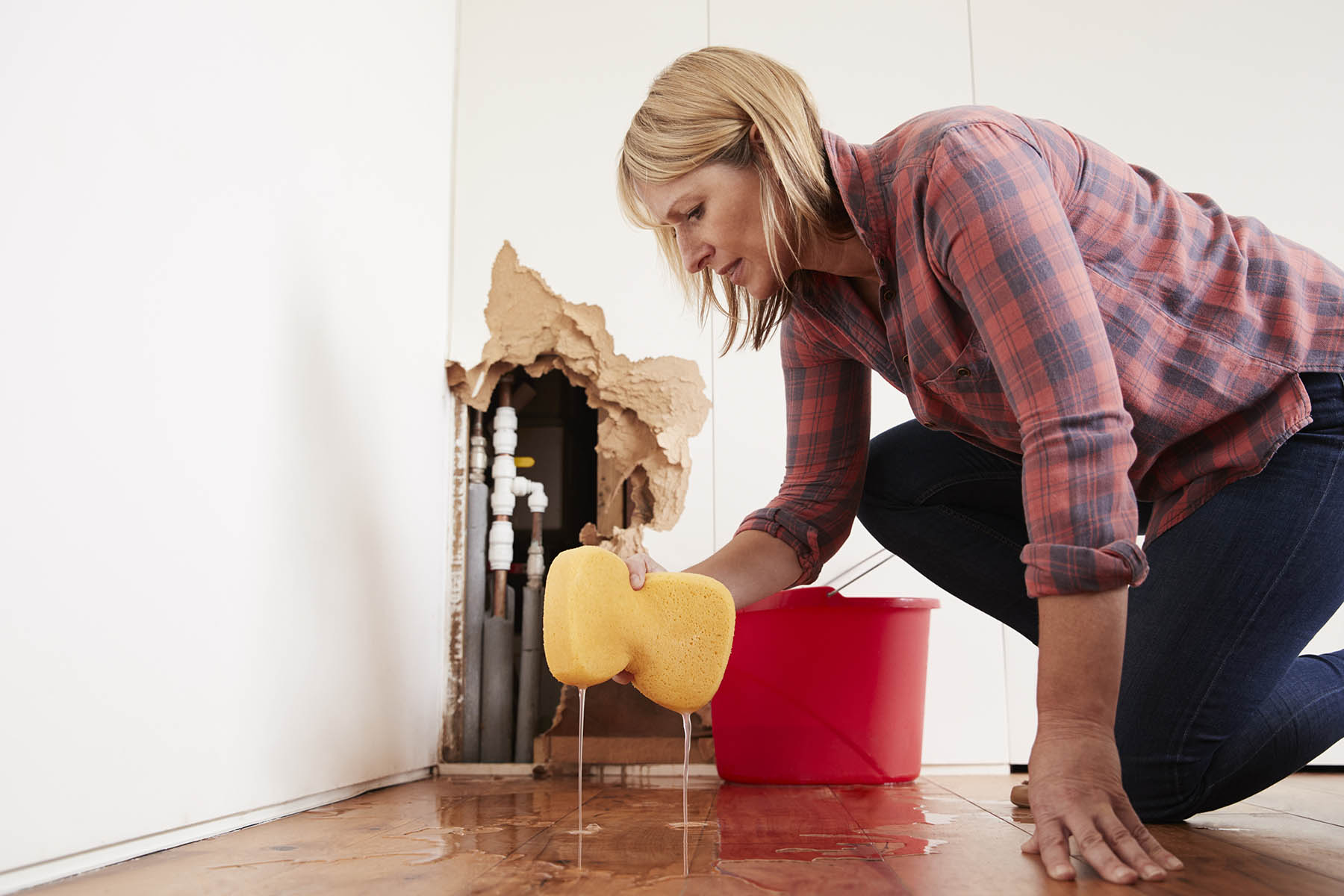
Wet baseboards, saturated carpet pad, damaged drywall, or affected cabinetry may need to be removed. Controlled demolition helps expose trapped moisture and allows materials to dry properly.
Drying and Dehumidification
Air movers push dry air across wet surfaces while dehumidifiers reduce humidity in the room. Technicians monitor progress and adjust equipment until target moisture levels are reached.
Cleaning and Sanitizing
Hard surfaces are cleaned. When mold or contaminated water is involved, crews use PPE and containment to reduce the spread of dust, debris, and spores. Biocides aren’t a shortcut for proper drying and removal of affected materials.
Verification and Rebuild
Once the area is dry and clean, damaged drywall, baseboards, flooring, paint, and finishes can be repaired or replaced. This is where an engineering-backed team can make a difference. Water damage repair isn’t only cosmetic. The repair plan should account for how water moved through the home, what materials were affected, and whether the building assembly has been returned to a safe and stable condition.
Insurance and Water Damage In California
Sudden and accidental water damage from inside the home is often covered under a standard homeowners policy. Examples may include:
- A burst supply line
- A sudden appliance leak
- An accidental overflow
However, standard homeowners’ policies often exclude damage caused by:
- Long-term seepage
- Unresolved maintenance issues
- Gradual leaks
Standard homeowners’ insurance doesn’t usually cover flooding from outside water. Flood coverage is separate and may be available through the National Flood Insurance Program or a private flood insurance policy. Keep receipts for emergency mitigation. Most policies require homeowners to take reasonable steps to prevent further damage after a loss, such as:
- Stopping the water source if possible
- Removing standing water when safe
- Hiring emergency mitigation help when needed
- Saving receipts for equipment, cleanup, and repair work
- Documenting the damage with photos and videos
California’s Fair Claims Settlement Practices Regulations generally require insurers to:
- Acknowledge notice of a claim.
- Provide necessary forms, instructions, and reasonable assistance within 15 calendar days.
- Accept or deny the claim in whole or in part within 40 calendar days after receiving proof of claim.
- Provide written notice if more time is needed.
- Explain why additional time is needed.
- Continue providing written updates every 30 calendar days until a determination is made.
Our professional restoration team can support homeowners during the restoration process by helping them:
- Document the damage
- Understand the repair scope
- Communicate with insurance carriers
- Organize photos, moisture readings, estimates, and repair documentation
The insurer makes coverage decisions, but clear documentation can make the claims process easier to navigate. If you’re unsure whether to file a claim, it can be helpful to schedule an inspection first, so you understand the likely extent of the damage.
Why Insurance Claim Support Matters
For many homeowners, the hardest part of water damage repair is not the drying equipment or demolition. It’s the paperwork, phone calls, estimates, inspections, and uncertainty around what insurance may or may not cover. A strong restoration contractor should help you understand:
- What materials were affected
- What emergency mitigation was performed
- What repairs are needed
- What documentation should be saved
- What photos, readings, and estimates may support the claim
- What questions to ask your adjuster
We work with homeowners throughout the recovery process, including support with insurance claims. That support can be especially valuable when hidden moisture, multi-room damage, cabinets, flooring, or structural materials are involved.
Preventing the Next Loss
After the home is dry and repaired, take steps to reduce the chance of repeat water damage.
- Replace rubber supply lines with braided stainless steel
- Shut off the water before long trips
- Maintain roofs, flashing, gutters, and downspouts
- Keep balcony drains and scuppers clear
- Add leak sensors near water heaters, laundry rooms, under sinks, and behind toilets.
- Consider an automatic water shutoff valve
- Slope the soil away from the foundation
- Keep drainage paths clear around the home
- Consider flood insurance if your property is exposed to storm runoff or is in a mapped flood risk area.
Examples
Seeing how another family successfully managed a sudden burst pipe provides immense comfort and points you to the exact specialists equipped to rescue your property.
Fast Cleanup Limits Damage
A condo in Irvine had a failed toilet supply line on a Sunday morning. The owner shut the valve, called the insurer, and started extraction within two hours. The restorer removed the carpet pad, set air movers and a dehumidifier, and cut 12 inches of drywall behind the vanity to ventilate the wall cavity.
With daily monitoring, moisture levels returned to normal in four days. Repairs were limited to baseboards, paint, and a new pad and carpet. The lesson: fast action and proper moisture detection can keep a small water loss from becoming a larger rebuild.
Contaminated Water Requires Specialized Work
A single-family home in Santa Ana experienced a late-night sewer backup that flooded a bathroom and part of a hallway. The crew established containment, wore appropriate PPE, extracted solids and water, removed affected carpet and two feet of drywall, cleaned and disinfected hard surfaces, and set drying equipment.
Because the water was contaminated, more materials had to be discarded. After the area was dry and cleared, a licensed contractor handled the rebuild under the appropriate permits. The lesson: contaminated water is not a normal cleanup job. It requires specialized handling, removal, cleaning, and documentation.
Actionable Steps / Checklist
Use this checklist if you discover water damage in your Orange County home:
- Shut off the water source if possible.
- Turn off electricity to affected zones if safe.
- Photograph rooms, closets, flooring, walls, and contents before moving anything.
- Call your insurer and ask where to submit photos, proof of claim, and receipts.
- Schedule a professional inspection if moisture may be hidden.
- Extract standing water from safe areas.
- Move furniture off wet flooring.
- Remove or lift the carpet if the pad is saturated and cannot dry quickly.
- Run fans and dehumidifiers to support drying.
- Bag and discard porous items that stayed wet for more than 48 hours and cannot be cleaned.
- Don’t run central HVAC if ducts or the system may be affected.
- Wear gloves, goggles, and an N95 when dealing with mold or dirty water.
- Call a licensed contractor if walls, ceilings, insulation, cabinets, or multiple rooms are involved.
- Keep a log of calls, dates, equipment used, receipts, and, if available, daily moisture readings.
- Fix the source of the leak before rebuilding.
- Consider upgrades like leak detectors, braided supply lines, and automatic shutoff valves.
Glossary
These specialized terms clarify the industry terminology used by insurance adjusters and mitigation technicians during a recovery project.
- Air Mover: A high-velocity fan that moves air across wet surfaces to speed evaporation.
- Dehumidifier: A machine that removes moisture from room air so materials can dry.
- IICRC S500: An industry standard that outlines best practices for professional water damage restoration.
- Moisture Mapping: Using meters and infrared tools to locate and track wet materials.
- Proof of Claim: Documents submitted to an insurer describing what happened and what it cost.
- Psychrometry: The science of air, humidity, and temperature used to control drying conditions.
- Porous Material: A material like drywall, carpet pad, insulation, or fabric that readily absorbs water.
- Contaminated Water: Water containing sewage, stormwater, or other pollutants that requires special handling.
FAQ
How long should drying take?
Most small, clean water losses dry in a few days with proper airflow and dehumidification. Larger losses involving walls, ceilings, cabinets, or flooring systems can take longer to repair, depending on the materials affected and humidity levels.
Do I need mold testing?
Usually not. If you see or smell mold, the priority is to fix the source of moisture and remove the growth. There are no federal mold level standards. Testing is generally reserved for specific situations.
Is bleach the best way to deal with mold?
Not by itself. Cleaning hard surfaces with detergent and water, removing unsalvageable porous materials, and drying completely are the core steps. Avoid routine biocide use and never mix bleach with ammonia.
Will insurance cover a roof leak from a storm?
Often, but it depends on the policy and the cause of the opening. Water damage from rain may be covered when it enters through a roof or window opening caused by wind or another covered exposure. Long-term maintenance issues aren’t typically covered. Read your policy and ask your adjuster to confirm.
Does homeowners’ insurance cover flood damage?
No. Flood damage from outside water is generally not covered by standard homeowners’ insurance. Flood insurance is available through the NFIP or a private policy.
What makes Rigid Remodeling and Restoration different?
Rigid Remodeling and Restoration offers free inspections, moisture detection, engineering-backed repair planning, and insurance claim support. The goal isn’t just to clean up visible water, but to identify the full scope of damage, document the loss, and restore the home correctly.
Should I call a contractor before filing an insurance claim?
In many cases, yes. A professional inspection can help you understand whether the damage is minor, whether moisture is hidden, and what documentation may be useful if you decide to file a claim.
Final Thoughts
Water damage repair in Orange County is manageable. It’s important to act quickly, protect your health, document carefully, and bring in licensed help when the job is too large, hidden, or contaminated for DIY cleanup.
The most important steps are simple: stop the source, dry materials quickly, look for hidden moisture, keep records, and fix the cause before rebuilding.
If you need help after a leak, overflow, storm intrusion, or plumbing failure, contact Rigid Remodeling and Restoration to schedule an inspection. Our engineering-backed team can help identify the extent of the damage, support the insurance documentation process, and guide your home from water damage to recovery.