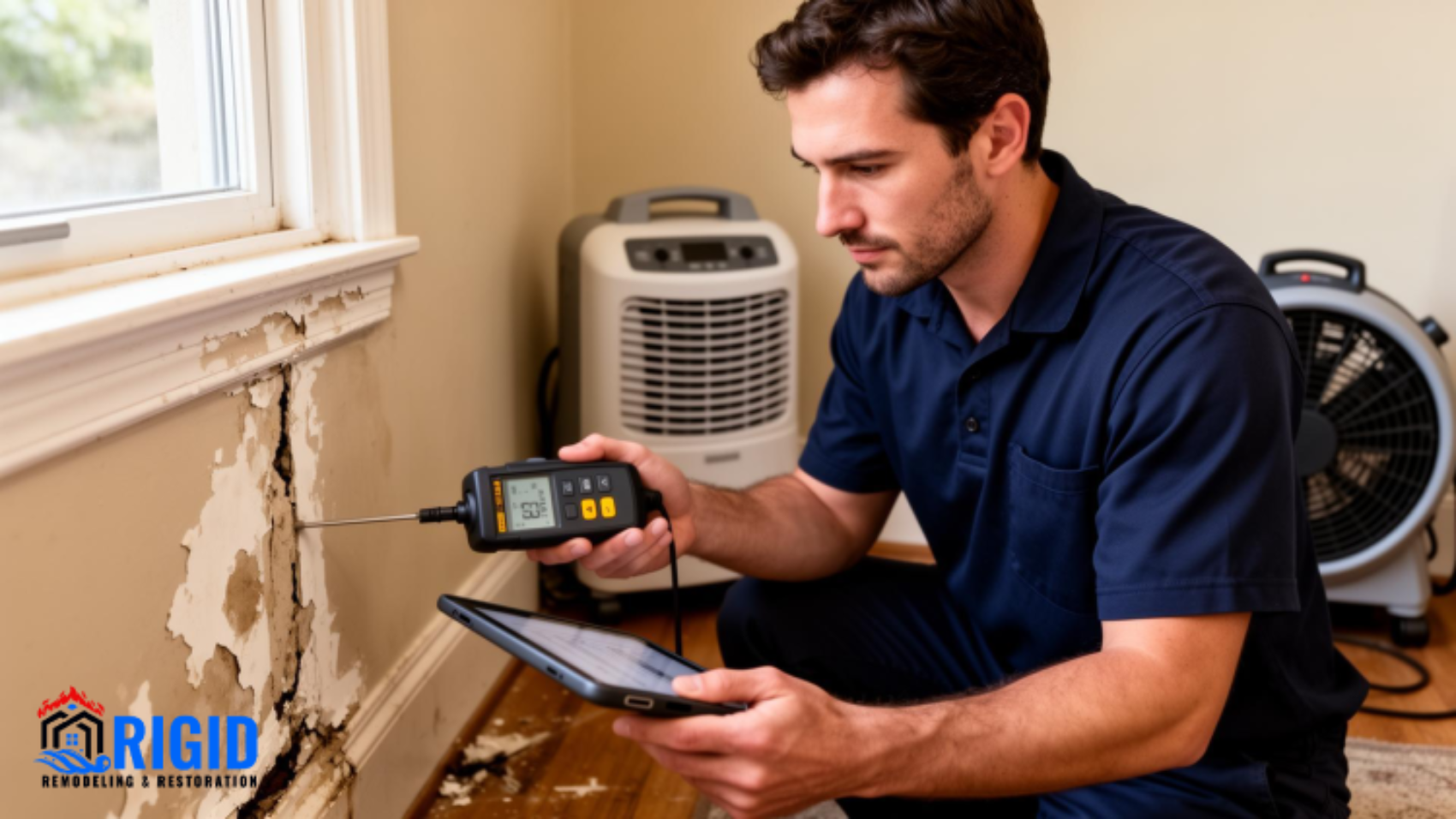
After a water leak, flood, or plumbing failure, cleaning up visible water can feel like the end of the problem. The floors may look dry, the carpets may feel normal, and the smell of dampness may have disappeared. However, moisture can remain hidden inside walls, beneath flooring, behind cabinets, and within insulation long after the surface appears clean.
Knowing how to tell if your home still has moisture after cleanup is essential for protecting your property and preventing mold growth, material deterioration, and recurring water damage. Even a small amount of trapped moisture can create problems if it remains undetected for too long.
In this guide, we explain the warning signs of hidden moisture, how to check different areas of your home, which moisture detection tools are useful, and when professional water damage restoration services may be necessary.
Why Moisture Can Remain After Water Damage Cleanup
Water damage cleanup involves more than removing standing water and drying visible surfaces. When water enters a home, it can travel through porous materials, seep into narrow gaps, and collect in places that are difficult to reach without specialized equipment. This is why a room may look completely dry while moisture remains inside its building materials.
The time required for a home to dry depends on several factors, including the amount of water involved, the type of materials affected, indoor temperature, humidity, airflow, and the drying equipment used. A small spill on tile may dry quickly, while a flooded room with wet drywall, carpet padding, and wood subflooring can require much more extensive drying.
Water Can Travel Beyond the Original Leak
Water does not always remain in the area where the leak or flood occurred. It can move downward through floors, travel along framing, spread behind baseboards, and enter wall cavities. In some cases, water can also move upward through porous materials through capillary action.
This means the visible damage may represent only a small portion of the affected area. For example, a washing machine leak in a laundry room may leave moisture beneath adjacent flooring or inside the wall behind the appliance. Without checking surrounding materials, these hidden areas can remain wet even after the original leak has been repaired.
Different Building Materials Dry at Different Rates
Not every material releases moisture at the same speed. Ceramic tile and other nonporous surfaces may appear dry relatively quickly, while drywall, insulation, carpet padding, and unfinished wood can retain water for much longer.
Wood may absorb moisture and swell, while drywall can soften or deteriorate when exposed to prolonged wet conditions. Carpet padding can hold water beneath the visible carpet fibers, making it difficult to judge the true condition of the floor by touch alone.
Understanding these differences helps explain why a home should not be considered fully dry simply because its surfaces no longer feel damp.
10 Signs Your Home May Still Have Moisture After Cleanup
After water damage restoration, it is important to look for changes that suggest moisture has not been completely removed. Some warning signs are easy to notice, while others may require closer inspection or professional testing.
The following indicators can help you identify areas that deserve further attention. Although one sign does not always confirm a moisture problem, several signs appearing together should not be ignored.
1. A Persistent Musty or Damp Smell
One of the most common signs of lingering moisture is a musty smell that continues after cleanup. This odor may be noticeable when entering a room, opening a closet, or turning on the HVAC system.
The smell can come from damp building materials, wet carpet padding, moisture inside wall cavities, or microbial growth associated with prolonged dampness. Sometimes, the odor becomes stronger when the room has been closed for several hours because air circulation is limited.
However, smell alone cannot confirm the presence or absence of mold. If the odor persists without an obvious source, a moisture inspection can help identify whether hidden materials are still wet.
2. Water Stains on Walls or Ceilings
Discoloration on walls and ceilings can indicate previous water exposure or an ongoing moisture problem. Yellow, brown, or irregularly shaped marks may remain after a leak, particularly if water has traveled through drywall, plaster, or ceiling materials.
A stain does not necessarily mean the material is still wet. Older water marks can remain after successful drying. The important question is whether the stain is growing, changing color, becoming soft, or reappearing after repairs.
If a previously repaired area develops fresh discoloration, bubbling paint, or new streaks, investigate the possibility of an active leak or moisture trapped behind the surface.
3. Peeling Paint or Bubbling Wallpaper
Paint and wallpaper can react to moisture trapped beneath the surface. Paint may bubble, crack, peel, or separate from drywall, while wallpaper may lift at the edges or develop wrinkles.
These changes can appear days or weeks after the original water event, particularly when moisture remains inside the wall or the affected materials were covered before drying was complete.
Although poor surface preparation and normal material aging can cause similar problems, peeling or bubbling in an area recently affected by water damage deserves closer inspection. Repainting the surface without identifying the moisture source may only hide the problem temporarily.
4. Warped Floors or Swollen Baseboards
Flooring provides important clues about moisture below the surface. Hardwood planks may cup, buckle, or separate, while laminate flooring can swell at the edges or develop raised seams. Baseboards may also expand, warp, or pull away from the wall.
These changes occur because many building materials absorb water and change shape as their moisture content increases. Even after standing water has been removed, moisture trapped beneath the flooring can continue affecting the material.
If flooring changes shape after a flood or plumbing leak, avoid assuming that the problem is purely cosmetic. A moisture meter and inspection of the subfloor may be needed to determine whether the affected materials have dried sufficiently.
5. Condensation on Windows or Other Surfaces
Condensation occurs when humid indoor air comes into contact with a surface that is cool enough for water vapor to turn into liquid. After a water damage event, persistent condensation may indicate that indoor humidity remains elevated.
Look for recurring water droplets on windows, damp window frames, or condensation around cold pipes. These signs can be especially noticeable in rooms with limited ventilation.
Condensation is not proof that a wall or floor is wet, and it can occur for reasons unrelated to a recent leak. However, when it appears alongside musty odors or visible water damage, it is worth checking indoor humidity and investigating possible moisture sources.
6. New Mold Spots or Discoloration
Mold can develop when moisture remains available on suitable surfaces. Growth may appear as small dark, greenish, gray, or other colored spots on drywall, wood, grout, fabric, or other materials.
It may first become visible near baseboards, behind furniture, around window frames, or inside closets where airflow is limited. Mold can also develop in concealed areas, meaning visible growth may represent only part of the affected area.
Not every dark stain is mold, and appearance alone cannot reliably identify a specific type. Avoid disturbing suspicious growth unnecessarily. If it is widespread, repeatedly returns, or is associated with extensive water damage, professional assessment may be appropriate.
7. Soft or Damp Drywall
Drywall that has absorbed water may feel soft, swollen, or unusually fragile. You may also notice crumbling edges, distorted corners, or areas that no longer feel firm when lightly touched.
These changes can indicate that the material has been exposed to significant moisture. Even if the surface feels dry, the interior of the drywall or the cavity behind it may still contain moisture.
Do not press hard on damaged drywall or attempt to open walls without considering electrical wiring, plumbing, and other hazards. If the material is visibly deteriorating, a qualified restoration professional can determine whether drying is sufficient or whether removal is necessary.
8. A Sudden Increase in Indoor Humidity
Indoor humidity can remain elevated after a water leak or flood, especially when wet materials release moisture into the air. You may notice that rooms feel stuffy, towels take longer to dry, or windows develop condensation more frequently than before.
A digital hygrometer can help measure relative humidity. As a general indoor comfort and moisture-control target, many homes aim for relative humidity between 30% and 50%, while the U.S. Environmental Protection Agency recommends keeping indoor humidity below 60%, ideally between 30% and 50%, when possible.
A high reading does not automatically mean that hidden building materials are wet. Cooking, showering, outdoor humidity, and inadequate ventilation can also raise indoor moisture levels. Still, persistent high humidity after water damage is a reason to investigate further.
9. A Damp Carpet or Unusual Feeling Underfoot
Carpets can conceal moisture because their upper fibers may feel dry while the padding underneath remains wet. Walking across the room may reveal areas that feel unusually cool, spongy, or slightly damp.
Moisture can also remain between the carpet padding and the subfloor, where normal room airflow cannot reach it effectively. This is particularly important after flooding or a substantial plumbing leak.
If carpet was exposed to contaminated floodwater or sewage, ordinary drying may not be sufficient to make it safe. The appropriate response depends on the contamination, the materials involved, and the extent of exposure. A qualified restoration professional can assess whether cleaning, removal, or replacement is needed.
10. Water Damage That Keeps Returning
One of the clearest warning signs is damage that repeatedly appears after the area has been cleaned or repaired. Paint may bubble again, a musty smell may return, or new discoloration may develop in the same location.
Recurring symptoms often suggest that the original moisture source has not been fully addressed. The cause could be a hidden plumbing leak, water entering through the building envelope, moisture trapped in materials, or condensation associated with poor ventilation.
Repeatedly cleaning or repainting the same area will not solve the problem if water continues entering the structure. The source must be identified, and affected materials must be evaluated to determine whether additional drying or repairs are required.
How to Check for Hidden Moisture in Your Home
Recognizing warning signs is the first step, but a more systematic inspection can help you determine whether additional drying is necessary. Begin with the areas most likely to have been affected by the original water event, then expand your inspection to nearby rooms and building materials.
A home inspection should combine visual observations, indoor humidity measurements, and moisture readings where appropriate. No single test provides a complete picture of every wall, floor, and concealed space.
Inspect the Original Water Damage Area
Start by examining the location where the leak, flood, or plumbing failure occurred. Look at the floor, baseboards, nearby walls, cabinets, and any materials that were previously wet.
Pay attention to changes that may have developed since cleanup, including discoloration, swelling, peeling finishes, loose flooring, or persistent odors. Check nearby rooms as well, because water can travel beneath floor coverings or through wall cavities.
Keep a record of the areas you inspect and any changes you notice. Photographs and dated notes can help you compare conditions over time and communicate the problem to a restoration contractor or insurance representative.
Check Areas Where Moisture Commonly Hides
Some parts of a home are more likely to retain moisture because they have limited airflow or contain materials that absorb water. Closets, spaces beneath sinks, areas behind refrigerators and washing machines, and the bottoms of cabinets deserve particular attention after a water event.
You should also consider wall cavities, subfloors, crawl spaces, basements, and areas around plumbing penetrations. If water reached an upper floor, inspect the ceiling and walls below the original leak as well.
Do not enter a flooded crawl space, a structurally damaged area, or a space with possible electrical hazards. Concealed areas may require professional inspection, especially if accessing them would involve removing building materials.
Measure Indoor Relative Humidity
A hygrometer is a simple device that measures the amount of moisture in the air relative to the maximum amount the air can hold at that temperature. It can help you understand whether indoor humidity remains unusually high after cleanup.
Place the device in the affected room and allow it to stabilize according to the manufacturer’s instructions. Compare readings over time and, if possible, check several rooms to identify areas with consistently higher humidity.
Remember that relative humidity measures moisture in the air, not the moisture content of a wall or floor. A room can have normal humidity while a section of drywall remains wet. For this reason, humidity readings should be considered alongside visual inspection and material moisture measurements.
Use a Moisture Meter on Suitable Materials
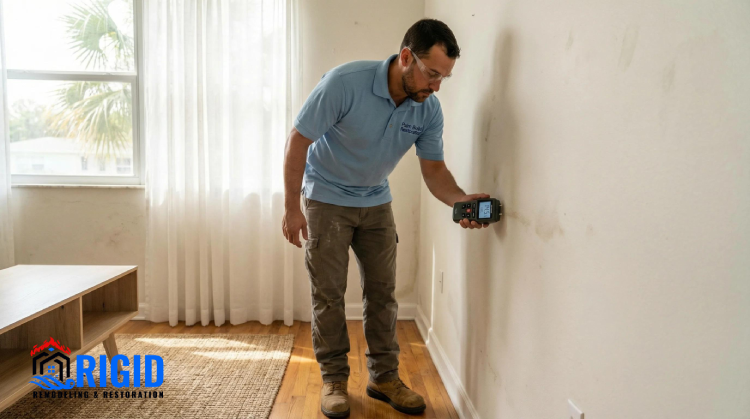
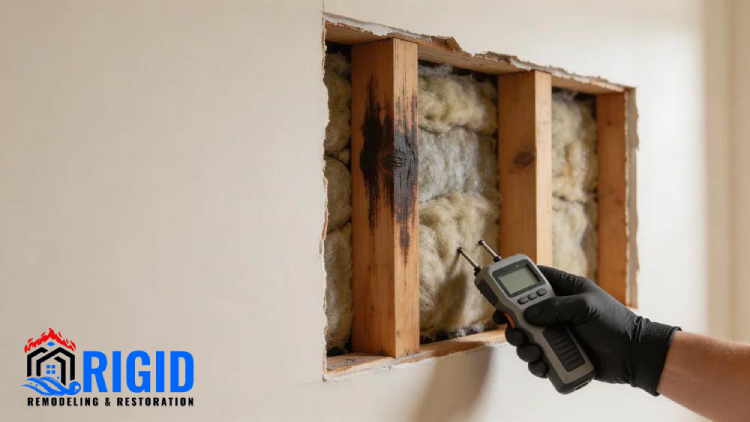
A moisture meter can help identify elevated moisture levels in materials such as wood and, with appropriate instruments, drywall or other building materials. Some meters use pins that contact the material, while others use non-invasive sensors to estimate moisture beneath the surface.
Take readings in several locations, including the affected area and comparable areas that were not exposed to water. Comparing similar materials can help identify unusual readings, although differences in material type, temperature, salts, and construction can affect results.
Follow the manufacturer’s instructions and use the correct settings for the material being tested. A moisture meter is a useful screening tool, but it does not automatically establish that a building is safe or fully dry. If readings remain elevated or the affected area is extensive, professional assessment may be needed.
Factors That Affect Drying Time
The amount of water involved is one of the most important factors. A minor plumbing leak that is discovered immediately is generally easier to address than a flood that saturates several rooms.
Material type also matters. Porous materials can absorb and retain water, while dense or nonporous surfaces may dry more quickly. Temperature, airflow, dehumidification, and the ability to access wet areas all influence how effectively moisture can be removed.
If the original leak remains active, drying will be difficult or impossible to complete. Before attempting to dry affected materials, the source of the water must be identified and repaired.
Why Waiting for Surfaces to Feel Dry Is Not Enough
A surface can feel dry even when moisture remains underneath it. For example, the top of a carpet may dry while the padding beneath it stays wet, and the painted side of a wall may feel normal while moisture remains inside the drywall or wall cavity.
This difference is important because trapped moisture can support mold growth and damage materials over time. Covering a damp surface with new flooring, paint, or trim can make the remaining moisture harder to detect and may slow the drying process.
Use appropriate moisture measurements and inspection results to confirm that affected materials have reached suitable drying levels before completing repairs.
What to Do If You Discover Moisture After Cleanup
Finding moisture after a cleanup does not always mean that the entire restoration process has failed. However, it does mean that the source and extent of the moisture should be evaluated before the area is closed up or repaired.
Your response should depend on whether the moisture comes from an active leak, residual water in building materials, or elevated indoor humidity. Addressing the cause first helps prevent repeated damage.
Stop Any Ongoing Water Intrusion
If you find an active plumbing leak, arrange for the water supply to be shut off when safe and have the problem repaired. If water is entering through the roof, windows, foundation, or exterior walls, the source of intrusion must also be addressed.
Never touch wet electrical equipment or enter an area where standing water may have reached electrical outlets, wiring, or appliances. If you suspect an electrical hazard, keep away and contact a qualified professional.
Drying equipment cannot solve an ongoing water intrusion problem. The affected materials may continue absorbing moisture until the source has been corrected.
Improve Air Circulation and Control Humidity
When the area is safe and the water source has been addressed, appropriate air circulation and dehumidification can help remove moisture from the indoor environment. Fans can support evaporation, while a dehumidifier removes water vapor from the air.
However, equipment must be selected and positioned appropriately for the size of the affected area and the materials involved. In some circumstances, moving air may spread contaminants or disturb mold growth, so professional guidance is important when contaminated water or significant microbial growth is suspected.
Simply opening windows is not always effective. If outdoor air is humid, bringing it inside may slow drying rather than improve it. Indoor and outdoor conditions should be considered before relying on natural ventilation.
Determine Whether Materials Need to Be Removed
Not every wet building material must be replaced. Some materials can be dried successfully when the water is clean, the damage is limited, and drying begins promptly. Others may be too damaged, contaminated, or difficult to dry safely.
Wet insulation, severely deteriorated drywall, swollen composite wood, and materials exposed to sewage or contaminated floodwater may require removal. The decision depends on the material, the duration of exposure, the type of water, and the extent of the damage.
Before removing materials, consider the possibility of hidden wiring, plumbing, structural components, and hazardous substances in older buildings. A qualified restoration professional can help determine the safest and most effective approach.
When Should You Call a Professional for Moisture Detection?
Some moisture problems are relatively easy to identify and resolve, while others require specialized equipment and experience. If you have persistent musty odors, recurring stains, elevated moisture readings, or visible damage that continues after cleanup, a professional inspection may be the best next step.
Professional water damage restoration companies can assess affected areas, measure moisture in building materials, and determine whether additional drying or removal is needed. Depending on the situation, they may use moisture meters, thermal imaging cameras, humidity monitoring equipment, and other inspection methods to identify areas that are not visible from the surface.
Situations That Require Professional Attention
Professional help is especially important when water has affected multiple rooms, entered wall cavities, reached insulation, or remained inside materials for an extended period. It is also advisable when there is significant mold growth, sewage contamination, structural deterioration, or uncertainty about whether the property is safe to occupy.
If moisture keeps returning after repeated drying attempts, the problem may involve an unresolved leak or another source of water intrusion. A professional can investigate the cause rather than simply treating the visible symptoms.
What Happens During a Professional Moisture Inspection?
A restoration professional typically begins by reviewing the water event, the cleanup already completed, and any signs of recurring damage. They then inspect affected materials and take measurements to understand where moisture remains.
Depending on the findings, the inspection may include moisture mapping, comparative readings, thermal imaging, or targeted access to concealed spaces. Thermal imaging can reveal temperature patterns that may suggest moisture-related concerns, but it does not directly measure water content and should be interpreted alongside other findings.
Final Thoughts
Knowing how to tell if your home still has moisture after cleanup can help you catch hidden problems before they lead to more extensive damage. Persistent musty odors, recurring water stains, peeling paint, warped flooring, elevated humidity, and soft drywall are all signs that deserve attention, particularly when they appear in areas recently affected by a leak or flood.
Visual inspection is a useful starting point, but it cannot always reveal moisture trapped inside walls, beneath flooring, or within insulation. Using a hygrometer and an appropriate moisture meter can provide additional information, while professional moisture detection may be necessary when damage is extensive or the source remains unclear.
Frequently Asked Questions
- How can I tell if my walls are still wet after water damage cleanup?
Look for discoloration, bubbling paint, peeling wallpaper, soft drywall, and persistent musty odors. However, these signs may not appear even when moisture remains inside a wall. A suitable moisture meter can help assess the material, and a restoration professional may use additional tools to investigate concealed areas.
- How long does it take for a house to dry completely after water damage?
Drying time depends on the amount of water, the materials affected, indoor humidity, temperature, and the equipment used. Some minor incidents may dry within hours, while significant water damage can require several days or longer. Moisture readings are more reliable than a fixed timeline for confirming that drying is complete.
- Can mold grow after a home looks completely dry?
Yes. Visible surfaces can dry while moisture remains inside drywall, insulation, carpet padding, or other porous materials. If those materials remain damp, mold may develop under suitable conditions. Hidden moisture should be investigated when musty odors, recurring stains, or other warning signs appear.