Imagine coming home to find water spreading across your living room floor because a pipe has burst while you were away. At first, the damage may seem manageable, but water can quickly move beneath flooring, soak into drywall, and reach areas you cannot see. What looks like a small leak can become a serious property problem within hours.
Knowing how soon to call a water mitigation company can make a significant difference in the amount of damage your home experiences. Acting quickly helps limit moisture exposure, reduces the risk of mold growth, and gives professionals a better chance of saving affected materials before they need to be replaced.
How Soon Should You Call a Water Mitigation Company After Water Damage?
In most situations, you should contact a water mitigation company as soon as you discover water damage and it is safe to do so. Ideally, professional help should arrive within the first few hours. Quick action allows technicians to assess the affected areas, remove standing water, and begin drying materials before moisture spreads further.
Water does not remain on the surface where it first appears. It can seep into carpet padding, travel beneath laminate flooring, absorb into drywall, and collect inside wall cavities. These hidden areas may remain wet long after the visible water has been removed.
Why the First 24 Hours Matter
The first 24 hours after water damage are important because moisture continues to affect building materials even after the original leak has stopped. Wood can swell, drywall can weaken, and insulation can absorb water, reducing its effectiveness.
Mold growth can begin within approximately 24 to 48 hours under favorable conditions, although the exact timing depends on moisture, temperature, materials, and other environmental factors. Calling a water mitigation company promptly gives professionals an opportunity to reduce moisture levels before conditions become more favorable for mold.
What Should You Do Before the Water Mitigation Team Arrives?
While waiting for professional assistance, you can take a few practical steps to reduce additional damage. Your safety should always come first, particularly when water is near electrical outlets, appliances, or damaged structural materials.
If the source of the water is obvious and it is safe to access, shut off the relevant water supply. For a burst pipe, this may mean turning off your home’s main water valve. If water is coming from a storm or another external source, avoid entering flooded areas until the situation has been assessed.
Once the area is safe, document the damage and move undamaged belongings away from affected spaces when possible. Avoid disturbing materials that may contain hazardous substances, and do not use electrical equipment in wet areas.
Read more: Bathroom Remodel Mistakes to Avoid
Stop the Source of Water if It Is Safe
Stopping the source can prevent additional water from entering your home. A leaking appliance, damaged supply line, or overflowing sink may be manageable by shutting off the appropriate valve, but extensive plumbing failures may require emergency assistance.
If you suspect a roof leak during a storm, do not climb onto the roof or attempt repairs in dangerous conditions. Instead, keep people away from the affected area and contact the appropriate professionals.
Document the Damage for Insurance
Take photographs and videos of visible water, damaged furniture, affected flooring, and the apparent source of the problem. Keep records of emergency repairs, mitigation services, and related expenses.
Contact your insurance company as soon as practical and follow its instructions for documenting the loss. However, do not delay urgent mitigation work simply because an insurance adjuster has not yet visited the property. Check your policy and insurer’s requirements while taking reasonable steps to prevent further damage.
How Quickly Does Water Damage Get Worse?
Water damage can develop in stages, and the speed depends on the amount of water, the materials involved, the room’s temperature, and how well the area is ventilated. A small clean-water leak may initially cause limited damage, while a flooded basement or burst pipe can affect several rooms in a short period.
The following timeline illustrates common risks after a water intrusion. It is a general guide rather than a guarantee of when specific damage will occur.
| Time After Water Damage | Potential Effects |
|---|---|
| First few hours | Water spreads, flooring becomes saturated, and porous materials begin absorbing moisture. |
| 6–24 hours | Moisture may move into wall cavities, subfloors, insulation, and furniture. Some materials may begin swelling or deteriorating. |
| 24–48 hours | Mold may begin growing under favorable conditions, and musty odors may develop. |
| After 48 hours | Prolonged moisture can increase the likelihood of material damage, microbial growth, and more extensive restoration work. |
These timeframes can overlap, and damage does not always follow a predictable sequence. The key is to remove standing water and begin appropriate drying as quickly as possible.
Why Hidden Moisture Is a Serious Concern
Water can travel beyond the area where a leak is visible. For example, water from an upstairs bathroom may seep through the ceiling and spread into insulation or the framing between floors.
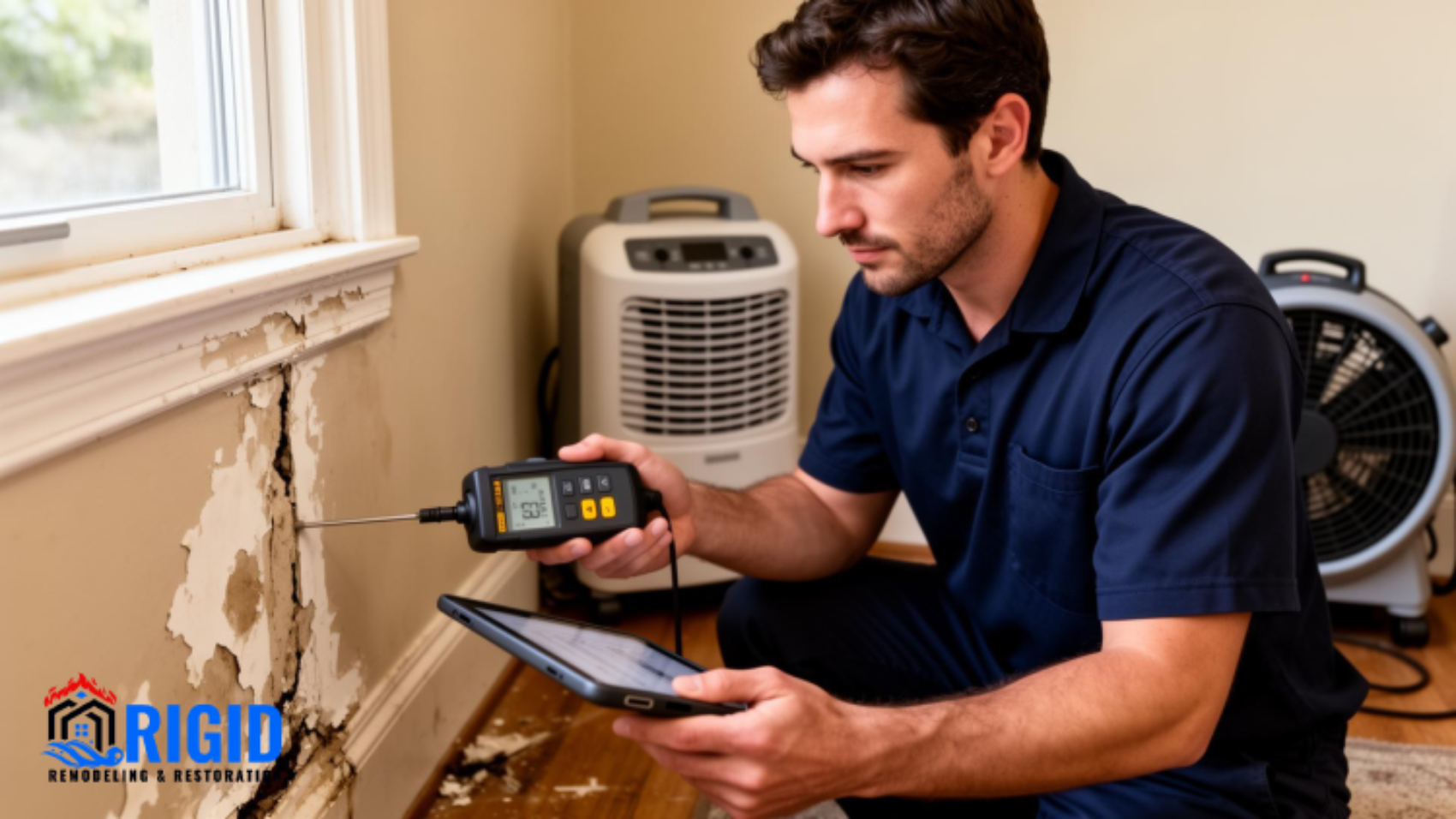
Professional mitigation teams use moisture meters, thermal imaging where appropriate, and other inspection methods to identify damp areas. Finding hidden moisture early helps prevent situations in which a room appears dry while the materials underneath remain wet.
When Is Emergency Water Mitigation Necessary?
Some water damage situations require immediate professional attention because the amount of water or the conditions involved create a risk to people, the building, or surrounding property.
A major pipe burst, sewage backup, storm flooding, or significant basement flood should be treated as urgent. Water entering electrical areas, ceilings that are bulging under accumulated moisture, and flooding near structural components also require prompt attention.
Burst Pipes and Major Plumbing Leaks
A burst pipe can release a substantial amount of water in a short time. Water may spread through multiple rooms, damage cabinetry, and penetrate walls and flooring before the leak is discovered.
After shutting off the water supply if safe, contact a plumber to repair the source and a water mitigation company to assess and dry affected areas. These services perform different roles: the plumber addresses the plumbing failure, while the mitigation team focuses on water removal and moisture control.
Basement Flooding and Storm Damage
Basements are particularly vulnerable because water can enter through foundation openings, floor drains, damaged sump pumps, or groundwater intrusion. Since basements often have limited ventilation, moisture can remain trapped in carpeting, drywall, stored belongings, and other porous materials.
If flooding involves sewage, outdoor floodwater, or an unknown source, do not attempt ordinary household cleanup without appropriate protective measures. Contaminated water may contain harmful microorganisms or chemicals, and professional assessment is important.
Sewage Backups and Contaminated Water
Sewage backups require special care because the water may contain pathogens and other hazardous contaminants. Keep people and pets away from affected areas and avoid direct contact with the water.
Contact a qualified restoration company that handles contaminated-water cleanup. Depending on the source and extent of contamination, affected porous materials may need to be removed rather than dried and reused.
Read more: 12 Kitchen Remodel Mistakes That Blow Budgets
Can You Wait Until the Next Day to Call a Water Mitigation Company?
Waiting until the next day is generally not recommended when water has entered building materials or continues to spread. Even when the visible water seems manageable, moisture can remain beneath flooring or inside walls, where it may cause damage without obvious warning signs.
However, not every situation requires the same response. A few drops from a spill on a sealed, nonporous surface may be handled with ordinary cleanup if the area is dried completely and no water has entered surrounding materials.
The important distinction is whether water has penetrated materials that can retain moisture. If carpet padding, drywall, insulation, wood flooring, or subfloors are wet, contacting a professional promptly is the safer choice.
What If the Area Looks Dry?
A dry-looking surface does not necessarily mean the underlying structure is dry. Carpets may feel dry on top while the padding beneath remains saturated, and painted drywall can conceal moisture inside the wall.
If the water source was significant or the affected materials are porous, consider a professional moisture inspection. This is particularly important when water has been present for several hours or when you notice discoloration, swelling, peeling paint, or a musty smell.
What Does a Water Mitigation Company Do During an Emergency Visit?
A water mitigation company works to control the immediate effects of water damage and reduce the risk of further deterioration. The exact process depends on the water source, contamination level, affected materials, and condition of the property.
The first step is usually an assessment to identify the source and extent of the damage. Technicians determine which areas are wet, whether the water may be contaminated, and what equipment or removal work is necessary.
Water Extraction and Removal
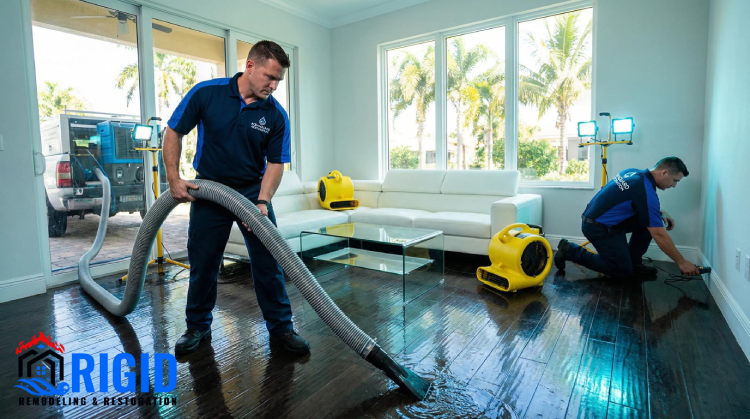
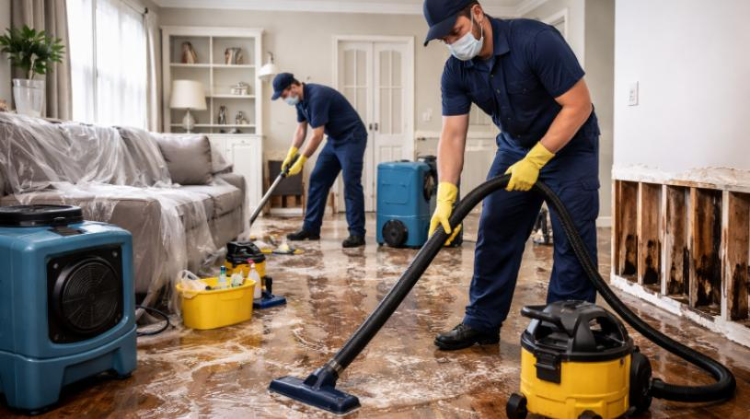
If standing water is present, technicians use suitable extraction equipment to remove it from floors, carpets, and other affected areas. Rapid extraction is especially important when water has spread across a large surface or entered porous materials.
Removing visible water is only the beginning. The team must also determine whether moisture remains in materials beneath the surface.
Structural Drying and Dehumidification
After extraction, technicians use air movers and commercial dehumidifiers to support evaporation and remove moisture from the indoor environment. Equipment placement depends on the layout of the affected area and the materials being dried.
Moisture readings help the team monitor progress and determine when drying goals have been reached. Drying time varies considerably, but many water mitigation projects require several days of controlled drying rather than a single afternoon.
Cleaning, Sanitizing, and Damage Assessment
Depending on the water source, technicians may clean and treat affected surfaces using appropriate products and procedures. Materials exposed to contaminated water may require specialized handling or removal.
The team can also identify materials that are unlikely to be restored and explain what additional repairs may be needed. Water mitigation generally focuses on controlling moisture and preventing further damage, while reconstruction may be handled separately.
How Much Does Emergency Water Mitigation Cost?
The cost of water mitigation depends on the size of the affected area, the amount of water, the category of water involved, the materials that need attention, and how long drying takes.
A small, contained leak may require limited extraction and drying. A major flood affecting multiple rooms can involve extensive equipment, monitoring, material removal, cleaning, and additional services.
The longer water remains in building materials, the greater the possibility that more extensive work will be required. However, cost is not determined by time alone; the source and severity of the damage are equally important.
Does Homeowners Insurance Cover Water Mitigation?
Homeowners insurance may cover reasonable mitigation expenses when the underlying water damage results from a covered event. For example, some policies cover sudden and accidental pipe leaks, while damage caused by flooding from outside the home may require separate flood insurance.
Coverage varies by policy, exclusions, deductibles, and the specific circumstances of the loss. Gradual leaks, neglected maintenance, and certain types of water intrusion may be treated differently from sudden plumbing failures.
Review your policy, notify your insurer promptly, and keep detailed records of the damage and mitigation work. Ask your insurance company whether it has documentation requirements or preferred procedures, but do not allow avoidable damage to continue while waiting for a coverage decision.
How to Choose the Right Water Mitigation Company
When water enters your home, speed matters, but choosing a qualified provider is also important. A reliable company should be able to explain its assessment process, describe the work it recommends, and provide clear information about costs and documentation.
Look for a provider with relevant water damage restoration experience, appropriate training, and the equipment needed for water extraction and structural drying. Ask whether the company handles your type of water damage, particularly if sewage or other contamination is involved.
It is also helpful to understand how moisture levels will be monitored and how the company will determine when drying is complete. Written estimates, service records, photographs, and moisture readings can help you understand the work performed and support communication with your insurer.
Avoid making a decision based solely on the lowest quoted price. The quality of the assessment and drying process can affect whether hidden moisture remains after the initial cleanup.
Final Thoughts
Calling a water mitigation company promptly after discovering water damage is one of the most effective ways to limit its impact on your property. In most cases, contacting a professional within the first few hours is preferable to waiting until the following day, particularly when water has entered flooring, drywall, insulation, or other porous materials.
The first 24 hours are especially important because moisture can spread into hidden areas, damage building materials, and create conditions that support mold growth. Acting quickly gives professionals a better opportunity to remove water, control moisture, and determine which materials can be restored.
Frequently Asked Questions
- How soon should a water mitigation company arrive after a flood?
You should contact a water mitigation company as soon as it is safe to do so. For significant flooding, burst pipes, or widespread water damage, an emergency response within a few hours is ideal. Actual arrival times depend on the provider, location, weather, and current demand.
- Can mold grow within 24 hours of water damage?
Mold can begin growing within approximately 24 to 48 hours when moisture and other environmental conditions are favorable. The timing varies, so there is no guaranteed period during which wet materials are safe from mold. Prompt extraction and thorough drying help reduce the risk.
- Should I wait for my insurance adjuster before starting water mitigation?
In general, you should not delay necessary emergency mitigation while waiting for an adjuster. Take photographs, keep receipts, notify your insurer, and follow your policy requirements. Reasonable steps to prevent additional damage may be important, although coverage for specific services depends on your policy.